
War and faith have long been intertwined. From the Crusades to modern-day conflicts, religious belief has often been invoked to justify territorial disputes, violence, and the suffering of civilians. But when we strip away the politics, the power struggles, and the historical grievances, a deeper question emerges:
What does the Israeli-Palestinian conflict say about God?
If religion is meant to be a force for peace, why does it so often fuel war? And if God is just, how do we reconcile that with the suffering of tens of thousands of innocent people?
As the conflict in Gaza intensifies, these questions are more pressing than ever.

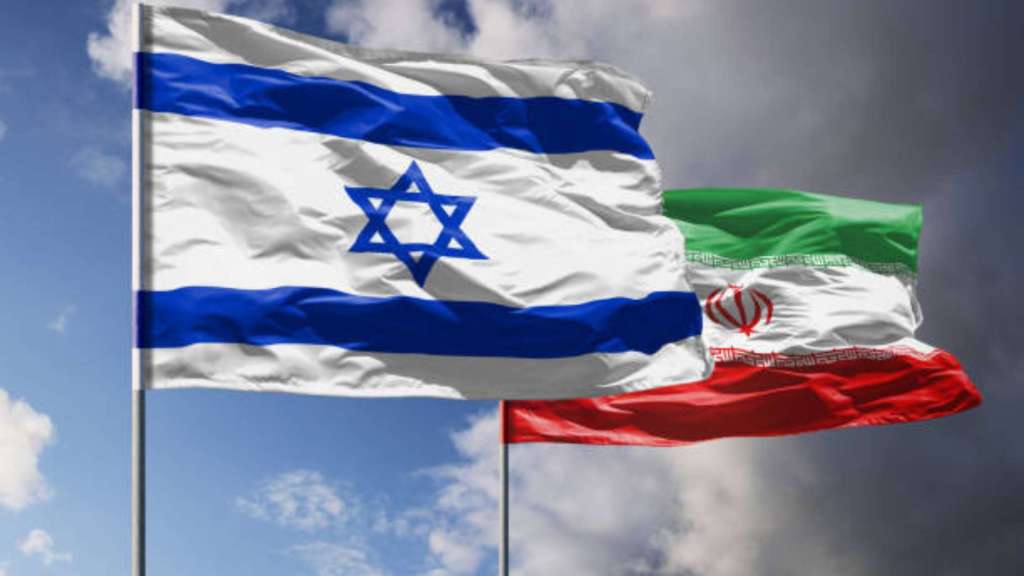
Photo credit: Sky News
The Human Cost of a War Over Land
Since the October 7, 2023, Hamas-led attack on Israel, the scale of destruction has reached catastrophic levels. More than 1,200 Israelis were killed in the initial assault, and over 240 hostages were taken. Israel’s response has been overwhelming. As of January 2025, reports indicate that more than 46,600 Palestinians have been killed in Gaza, with over half of the identified victims being women, children, or the elderly (Reuters).
In addition to the staggering loss of life, over 1.9 million Gazans—nearly 85% of the population—have been displaced from their homes (AP News). The humanitarian crisis is one of the worst in modern history, yet the cycle of violence continues.
Both sides claim religious and historical rights to the land. But at what cost? And more importantly, is this what God would want?
Religion as Justification for Violence
The land of Israel-Palestine holds profound religious significance for Jews, Muslims, and Christians alike. Jerusalem, home to the Western Wall, the Al-Aqsa Mosque, and the Church of the Holy Sepulchre, is a sacred city for three major world religions. But that shared reverence has not led to coexistence—it has instead fueled centuries of conflict.
For many Israeli settlers, the belief that God granted the land of Israel to the Jewish people is non-negotiable. This theological stance drives efforts to expand Israeli settlements, despite international condemnation (The Guardian).
On the Palestinian side, Hamas—a fundamentalist Islamist organization—invokes religious duty in its call for armed resistance, claiming that jihad is necessary to reclaim their homeland (Al Jazeera).
Both sides claim divine justification. Yet both sides are also responsible for immense human suffering.
If we take religious texts at face value, the core tenets of all three Abrahamic faiths—Judaism, Christianity, and Islam—preach peace, justice, and compassion. But history has repeatedly shown that religion, when wielded as a political tool, often leads to destruction rather than salvation.

The Ethics of War: When Does It Stop?
In times of war, leaders often claim that violence is a necessary evil. But at what point does “defense” become indiscriminate slaughter?
Israel justifies its military campaign as a defensive response to Hamas, arguing that eradicating the terrorist group is the only way to secure peace. However, the disproportionate use of force has raised global alarm. The International Criminal Court is currently investigating potential war crimes committed by both Hamas and Israel (BBC).
Meanwhile, controversial political figures like Donald Trump have suggested extreme measures, including forcibly relocating Palestinians from Gaza—a proposal that international legal experts have condemned as ethnic cleansing (The Times).
If leaders on both sides invoke faith to justify war, then we must ask: At what point does religion cease to be a guide for morality and instead become a tool for oppression?
Moving Forward: Faith as a Path to Peace
Despite the bloodshed, history offers us glimpses of another path. Religious leaders, scholars, and activists across the world continue to advocate for peace based on shared values, rather than division.
One such example is Kairos Palestine, a movement led by Palestinian Christians calling for nonviolent resistance and an end to the occupation. Their 2009 declaration states:
“The Israeli occupation of Palestinian land is a sin against God and humanity, because it deprives Palestinians of their basic human rights and distorts the image of God in the oppressor and the oppressed alike.”
Their call to action is not for violence, but for peace rooted in justice (Kairos Palestine).
Similarly, interfaith organizations like Churches for Middle East Peace work to promote reconciliation, urging world leaders to pursue a diplomatic resolution that recognizes both Israeli and Palestinian rights to self-determination (Churches for Middle East Peace).
These efforts remind us that religion can still be a force for healing, rather than destruction. But that requires religious leaders and believers alike to reject extremism and embrace the core message of peace that faith was meant to embody.
Faith, War, and the Human Spirit
“In Joseph’s Letter, Michael Battersby believes that if he can just find the truth—just one piece of undeniable proof—then everything will make sense. But as his journey unfolds, he comes to realize that certainty is an illusion. Faith, whether in religion or justice, is not about having all the answers—it’s about making choices in the face of uncertainty. The same is true for this conflict. If we wait for a perfect solution, for a moment where all history is resolved and all grievances erased, we will never move forward. The question is not whether absolute justice can be achieved, but whether we have the courage to choose peace, even when the path is unclear.”
Download the first chapter of Joseph’s Letter for free by subscribing to our newsletter.
Final Thoughts
This war is not just about politics. It is about people—mothers, fathers, children—who are suffering because of decisions made in the name of faith and history. If religion is to mean anything, it must mean more than land. It must mean humanity.
Until we embrace that truth, the cycle of violence will never end.
 Robert Parsons