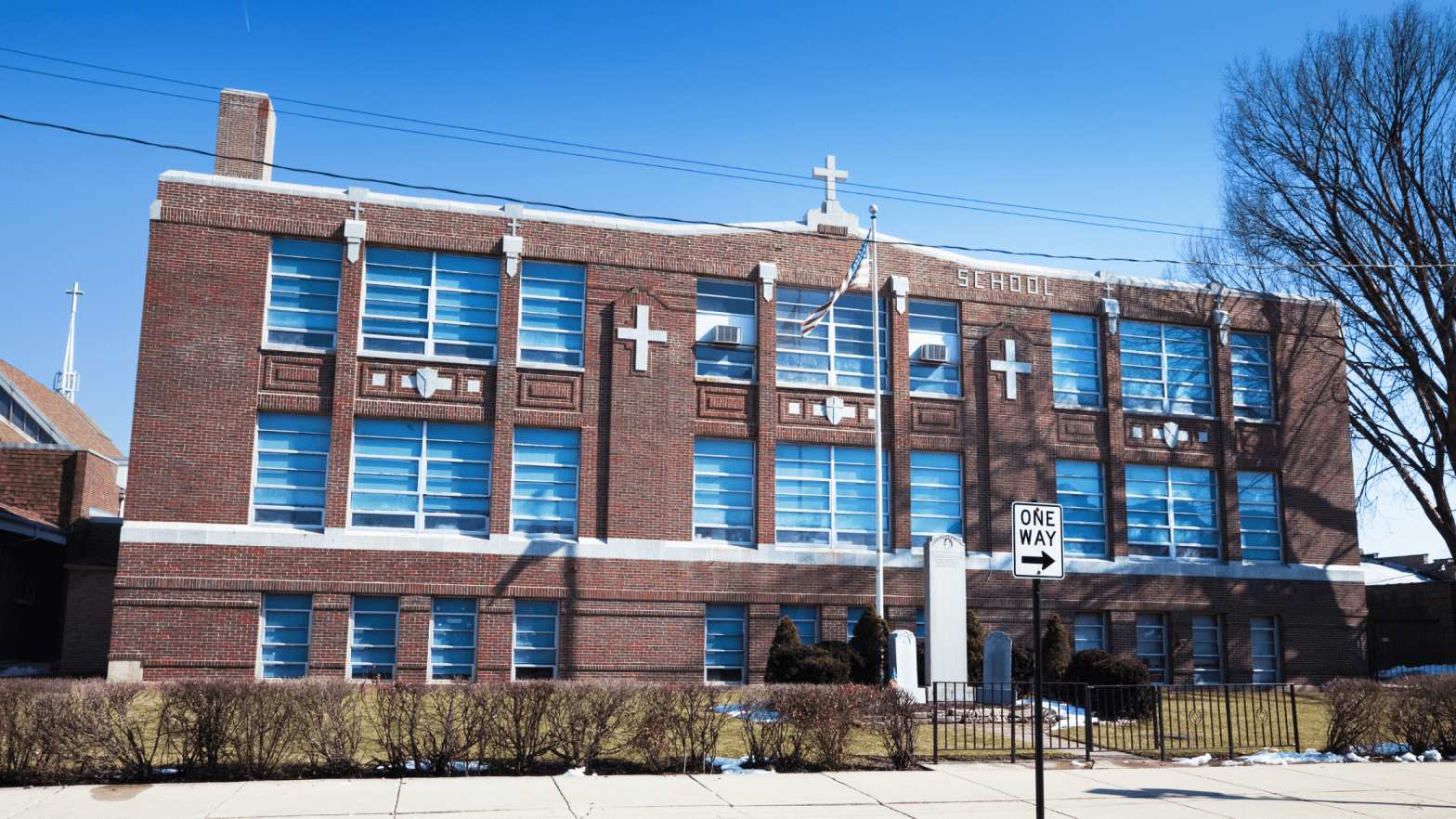
For a system built on resistance to discrimination, Australia’s Catholic schools have taken an unusual turn. Once created as a response to anti-Catholic government policies, they now educate nearly 40% of students who aren’t Catholic and receive significant public funding.
Meanwhile, in the United States, Catholic schools struggle to survive due to a stronger separation of church and state. This raises a set of intriguing questions: Why do so many non-religious families choose Catholic schools? Should taxpayer dollars fund religious institutions?
Has Catholic education evolved into something more secular, or does it still serve its original mission? These complexities shape the ongoing conversation about faith, education, and modern society.
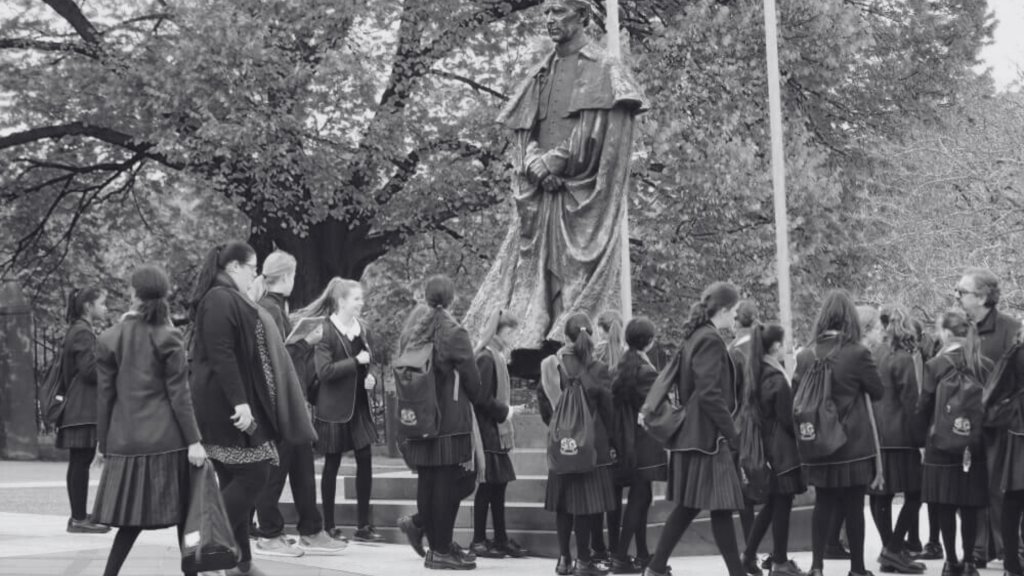
Image Source: Shutterstock
A History of Resistance: How Catholic Schools Came to Be
Catholic schools in Australia were not established as an alternative private education option but rather as a necessity for Catholic survival. In the 19th century, the Australian government was openly biased against Catholics, many of whom were Irish immigrants.
Funding for Catholic schools was cut off entirely in the 1870s, forcing the Catholic Church to establish its own system. Fast forward to today, and Catholic schools are no longer marginalized but deeply integrated into the education system.
Unlike the U.S., where religious schools receive little public money, Australian Catholic schools are government-funded, meaning taxpayers—regardless of religious belief—subsidize their operations.
This has led to ongoing debates about whether public money should support religious institutions and to what extent Catholic schools should be held to the same standards as public schools.
Read more on the history of Australian Catholic education.
Publicly Funded, Privately Run: Should Catholic Schools Get Government Money?
In Australia, Catholic schools receive billions of dollars in government funding each year. They operate similarly to public schools but with a religious framework. The paradox? Many students aren’t Catholic, and some schools even have higher fees than public schools while still receiving subsidies. In contrast, the U.S. has a strong constitutional separation of church and state, making public funding of religious schools highly controversial. School voucher programs exist, allowing families to use public funds for religious schools, but they remain hotly debated.
Explore how U.S. voucher programs work.
If a school receives public money, should it be required to follow the same rules as public schools in areas like hiring policies and curriculum requirements? Or does government funding blur the line between religion and state? These questions continue to fuel discussions on both sides of the debate.
Who Attends Catholic Schools—And Why?
Catholic schools today serve a much broader demographic than their founders intended. In Australia:
- 40% of students aren’t Catholic
- 50% are baptized but non-practicing
- Many families enroll for academic reputation, discipline, and affordability compared to elite private schools
In the U.S., Catholic school enrollment has dropped significantly due to declining religious affiliation and financial constraints. While Catholic schools once dominated the private school sector, many have closed or merged in recent decades.
See U.S. Catholic school enrollment trends.
Has Catholic education become just another private school brand rather than a faith-based institution?
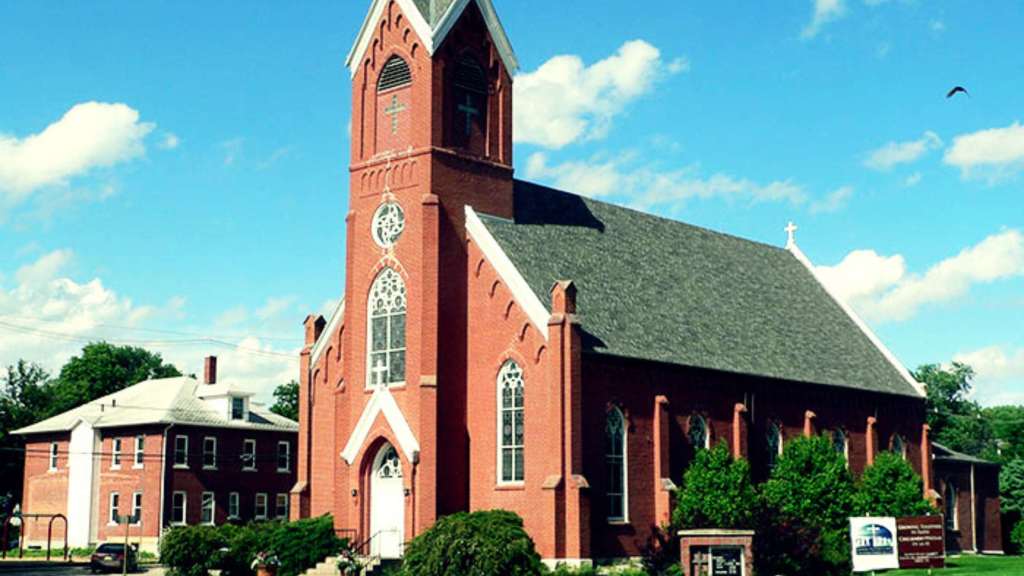
Faith vs. Education: Are Catholic Schools Still Religious?
Historically, Catholic schools were meant to preserve religious identity and ensure students received an education rooted in faith. But today:
- Religious studies are often treated as just another subject, not a core belief system.
- Many Catholic schools accept students from all backgrounds, creating a more inclusive but less religious environment.
- Some Catholic schools struggle with modern social issues (e.g., LGBTQ+ inclusion, sex education, science vs. faith).
As the student body diversifies, should Catholic schools continue prioritizing faith, or should they embrace a more secular identity? This tension remains unresolved, as Catholic schools attempt to uphold religious traditions while adapting to contemporary expectations.
Australia vs. the U.S.: A Tale of Two Catholic School Systems
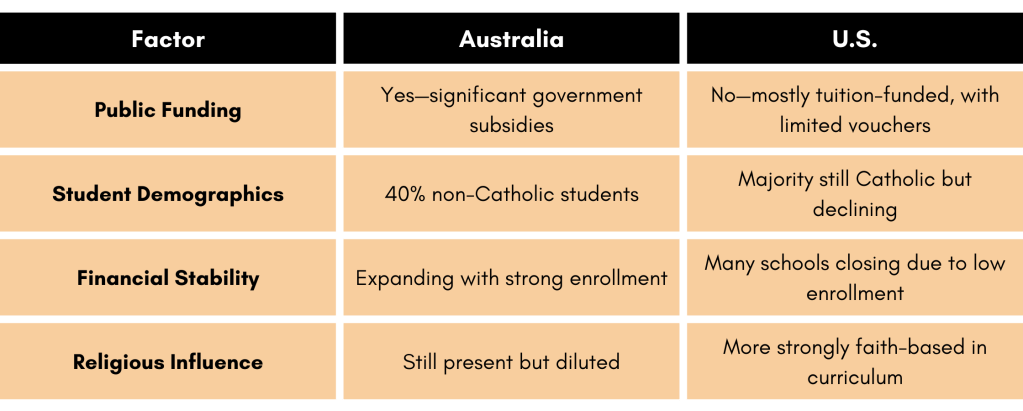
The Australian model integrates Catholic schools into the national education system, while the U.S. model separates them more starkly. Which approach is better? That depends on how you view the role of religion in society.
The Bigger Picture: What This Says About Religion and Society
The evolution of Catholic education is part of a broader conversation about faith in a secular world:
- Are Catholic schools a way to keep religion relevant, or have they become secular institutions with a religious brand?
- Should religious schools be allowed to shape education if they receive public funding?
- If fewer people actively practice Catholicism, what role should Catholic schools play in the future?
For many families, Catholic schools are not about faith but about opportunity—better education, structure, and affordability compared to elite private schools. But this shift raises questions about what it really means to be a Catholic school in the modern world.
Final Reflection: Beyond Right or Wrong
There’s no simple answer to the questions surrounding Catholic education. It’s a complicated, evolving institution that reflects the tensions between tradition and progress, faith and pragmatism, religious identity and secular reality.
As we move forward, perhaps the real question isn’t whether Catholic schools should exist or be publicly funded, but what they should stand for. Are they guardians of faith? Are they just an alternative to public schools? Or are they something else entirely?
We leave it to you to decide.
Further Reading
- The State of Catholic Schools in Australia (National Catholic Education Commission)
- Catholic School Enrollment Trends in the U.S. (NCEA)
- History of Catholic Education in Australia (Australian Catholic University)
What do you think? Are Catholic schools still religious institutions, or have they evolved into something else? Share your thoughts below.
Personal Journey Approach
Faith, doubt, and education—what happens when they collide? Joseph’s Letter explores these very questions through a gripping narrative. Start reading the first chapter for free and immerse yourself in a story that makes you think twice about what we’re taught to believe.
 Robert Parsons