
For many students who pass through religious schools, faith is presented as a guiding light—one that offers moral clarity, a sense of belonging, and a framework for understanding the world. How can religious education balance teaching with open exploration? Where is the line between nurturing faith and enforcing belief?
Religious schools, particularly Catholic institutions, play a crucial role in shaping young minds. They introduce students to sacred texts, moral teachings, and religious rituals.
However, not all students experience religious education the same way. Some find it empowering, offering a spiritual foundation that helps them navigate life’s challenges. Others, however, feel controlled, with religion imposed upon them rather than offered as a choice.
This post explores the tension between education and indoctrination, the role of rituals in reinforcing belief, and how critical thinking can be encouraged or stifled within religious schools.
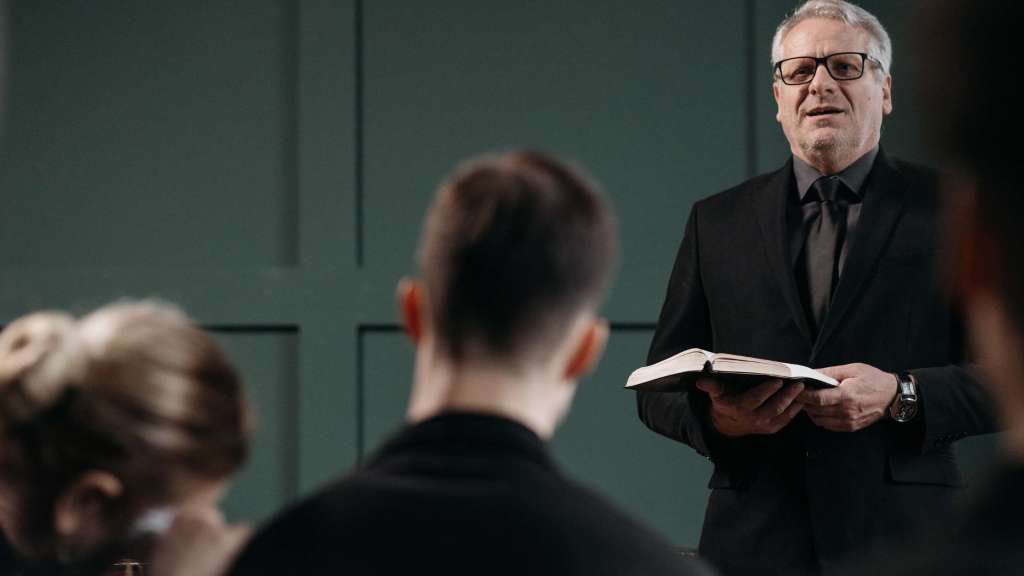
Teaching vs. Indoctrination: Where’s the Line?
Education is meant to equip students with knowledge and critical thinking skills, encouraging them to question, analyse, and form their own conclusions. Indoctrination, on the other hand, discourages independent thought and promotes blind acceptance.
The question then becomes: how do religious schools approach faith?
- Do they encourage questions and discussions about belief, or do they shut them down?
- Are students allowed to explore other religious perspectives, or is one doctrine enforced as absolute truth?
- Is faith presented as a journey, or is it something to be memorised and recited without personal reflection?
In some Catholic schools, religious education is framed as a subject—one that can be studied and questioned. But in other institutions, students who express doubt are met with resistance, and questioning faith is seen as a lack of discipline rather than curiosity.
Robert Parsons, a former teacher, recalls his own experience: “In my first year of teaching, Brother Thomas, the Marist Brother school principal, asked me to teach religion. I told him I didn’t believe everything the Church told us.
He said, ‘Neither do I. Only teach what you believe.’” This rare moment of honesty within the system raises an important point—if even teachers have doubts, shouldn’t students be encouraged to think for themselves?
Read more on the role of religious instruction in schools.
The Power of Rituals: Meaningful or Just Performative?
Religious education isn’t just about lessons—it’s about rituals. Prayer, confession, sacraments, and school-wide religious observances all reinforce belief in ways that often bypass critical thought.
Consider the daily rituals in Catholic schools:
- Morning prayers repeated daily, often without much reflection.
- Confession, where students are encouraged (or required) to admit sins.
- Holy Communion and Confirmation, sacraments performed in school settings.
- Mass attendance as part of the curriculum.
For some students, these rituals hold deep spiritual significance, offering moments of reflection and connection with faith. But for others, they become rote performances, done out of obligation rather than belief. The question is, are students participating because they genuinely believe, or because it’s expected of them?
Psychologists argue that repetitive rituals can reinforce belief over time, as shown in studies on ritual behaviors and cognitive conditioning.
Research from the American Psychological Association suggests that repeated religious practices can create a deep-seated sense of identity and belonging, sometimes independent of personal conviction, even if the participant starts off without conviction. The act of kneeling, praying, and repeating sacred words can instill a sense of faith through repetition alone, rather than personal conviction.
Read more about the psychology of rituals.

Critical Thinking vs. Blind Faith: What Are Students Really Learning?
The most effective religious education programs are those that encourage exploration rather than impose belief.
Some religious schools have begun adopting more open-ended approaches, allowing students to engage in programs like the Philosophy and Religious Studies curriculum in some Australian Catholic schools, or the interfaith dialogue initiatives seen in institutions like Georgetown Preparatory School in the U.S. These approaches encourage students to:
- Explore different faith traditions in religious studies classes.
- Engage in open discussions about doubt and belief.
- Critically analyze religious texts rather than just memorize them.
But in many institutions, questioning doctrine is still seen as rebellion rather than intellectual curiosity. If students are primarily taught that faith is about obedience rather than understanding, does this approach truly educate them, or does it risk discouraging independent thought?
While some religious schools foster critical thinking, others may emphasize conformity, shaping how students engage with their beliefs.
Perhaps Brother Thomas had it right—teachers, like students, should be free to explore their beliefs, rather than enforce an absolute truth.
Final Reflection: Are We Teaching Faith, or Demanding It?
Religious education should be about helping students develop their own understanding of faith, not just accepting what they are told. Schools should encourage dialogue, exploration, and personal reflection, rather than just expecting students to conform.
But the reality is, many students leave religious schools with little more than memorized prayers and vague notions of doctrine—not a true connection to faith. Others leave with deep resentment, feeling that they were never given the chance to think for themselves.
So, what is the real goal of religious education? To create believers, or to create thinkers?
Further Reading & Resources
- The Role of Religious Education in Schools
- The Psychology of Rituals
- Critical Thinking in Religious Education
What do you think? Should religious education focus more on exploration, or is tradition necessary for faith to take root? Share your thoughts below.
A Thought-Provoking Invitation
Curious to see these ideas play out in fiction? Joseph’s Letter takes you deep into the questions of faith, doubt, and the search for truth within religious education. Download the first chapter for free and step into a story that challenges the very foundation of belief.
 Robert Parsons