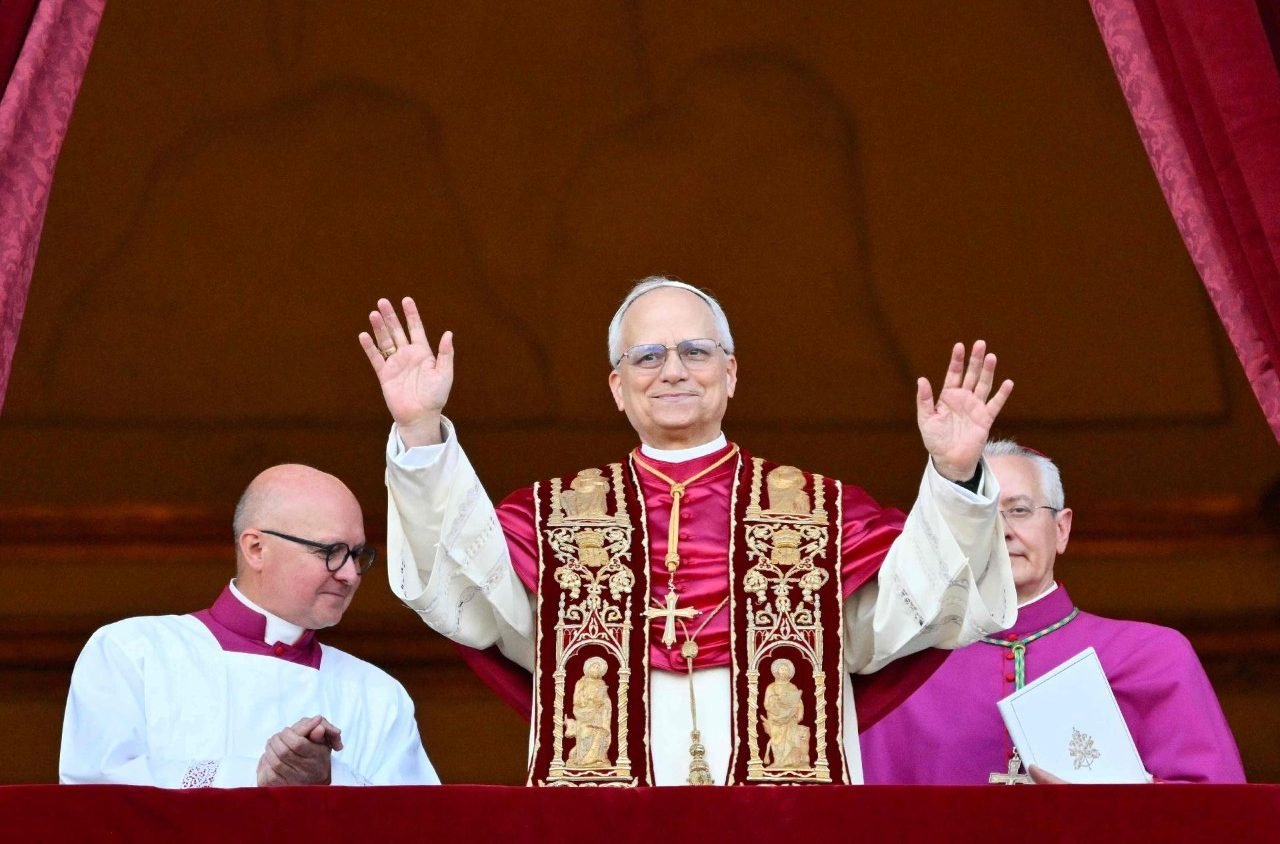
The election of Pope Leo XIV—an American-born pontiff with roots in Latin American missionary work and a background in mathematics—has ushered in a moment of profound symbolic weight for the global Catholic Church.
His papacy arrives not only at a time of geopolitical complexity, but in an age defined by disillusionment with institutional religion and a growing cultural hunger for authenticity, connection, and meaning.
While the media focuses on the political implications of his election, Robert Parsons’ novel Joseph’s Letter offers a deeply human counterpoint: an intimate portrayal of one man’s search for proof of the divine amidst grief, loss, and the silence of God.
The intersection of these two events—one real, one fictional—reveals a shared tension between institutional power and personal faith, between the preservation of tradition and the longing for truth.

Image: SBS News
A Shift in Spiritual Authority
Pope Leo XIV represents a convergence of contrasts. His appointment—marked by surprise and skepticism—signals a Church at the crossroads of tradition and reform. With a foundation in canon law and a pastoral history in Peru, Leo XIV brings both intellectual rigor and grassroots compassion to his role.
His declared emphasis on synodality, missionary dialogue, and social justice aligns him with his predecessor, Pope Francis, while simultaneously indicating an openness to evolution within a historically rigid institution.
Yet even as Leo XIV steps into a role shaped by centuries of doctrine, Joseph’s Letter suggests that individual seekers are no longer content to passively inherit belief. Michael Battersby, the novel’s protagonist, does not represent a rejection of faith—he represents a refusal to let it stagnate.
In seeking out Joseph’s Letter, a scroll rumored to validate the Shroud of Turin, Michael embodies the spiritual crisis of our time: the need to reconcile belief with evidence, devotion with doubt.
Grief as Catalyst: The Personal Becomes Theological
At the heart of Joseph’s Letter lies a grief so deep it collapses certainty. Michael’s wife, Margaret, is dead—an absence that is more than emotional. It is existential. Her death ruptures his spiritual equilibrium and catalyzes his obsessive search for answers.
Parsons frames Michael’s grief not merely as a personal tragedy, but as a spiritual vacuum—one that propels him toward theological inquiry as a means of regaining connection with the transcendent.
This mirrors a broader cultural trend in the 21st century: the movement away from inherited belief systems toward self-directed spiritual exploration. The question Michael asks—“Is she gone, or is she somewhere?”—echoes in the minds of millions seeking proof not of God, but of continuation.
Pope Leo XIV’s mission to revitalize the Church’s relevance may hinge on his ability to speak to this same ache—not with answers, but with empathy.

Faith vs. Institution: A Quiet Schism
Where Joseph’s Letter gains its most incisive power is in its depiction of institutional resistance. Cardinal O’Grady, the novel’s primary antagonist, functions not as a villain in the traditional sense, but as a personification of the Church’s defensive posture. His resistance to Michael’s pursuit is not grounded in malice, but in fear—fear that a single scroll might destabilize centuries of curated doctrine.
This fear is not unfamiliar. Real-world Church lobbying against transparency, particularly around issues of abuse or historical revisionism, demonstrates the extent to which institutions may prioritize self-preservation over spiritual truth. Parsons’ portrayal of O’Grady invites readers to question whether institutional religion can truly serve as a vessel for divine discovery—or whether it has become a gatekeeper to prevent it.
In contrast, Pope Leo XIV may offer a different path forward. His scientific background and pastoral history suggest an awareness of the limits of doctrine when divorced from lived experience. But whether such a figure can meaningfully shift a centuries-old institution remains an open question—one that Parsons wisely leaves unresolved in his novel.
The Afterlife as Metaphor and Mystery
Michael’s vow—“I will find you in eternity”—serves as the thematic spine of Joseph’s Letter. It is both a declaration of love and a challenge to theology. The afterlife, for Parsons, is not simply a destination—it is a metaphor for meaning itself. In Michael’s search for Joseph’s Letter, we witness a search for coherence: a belief that death is not the end, that love imprints beyond the physical, that faith can be reawakened not just through mystery, but through evidence.
Pope Leo XIV’s role as a global spiritual leader places him in a similar position. He inherits a Church where belief is increasingly fragmented, where tradition is no longer enough to compel loyalty. He must navigate the paradox at the heart of Parsons’ novel: that the human desire for proof may be inextricable from the human need to believe.
Conclusion: Literature and Leadership in a Shared Spiritual Landscape
Ultimately, Joseph’s Letter and the rise of Pope Leo XIV both pose a quiet but powerful question: Is faith still relevant in a world where institutional authority is increasingly questioned, and personal experience reigns supreme?
Parsons does not offer a definitive answer, and neither, perhaps, can the new Pope. But both the novel and this historic papacy point to the same truth: that belief is not static. It is forged in fire, in doubt, in love, in silence—and in the relentless human urge to make sense of what lies beyond.
In that way, Michael Battersby and Pope Leo XIV are mirror images—one fictional, one real—both tasked with carrying the weight of belief into the future.
FUN FACT: Robert Francis Parsons shares the same name as Pope – Robert Francis!
Enjoyed this post? Enjoy the first chapter of Joseph’s Letter free!
 Robert Parsons