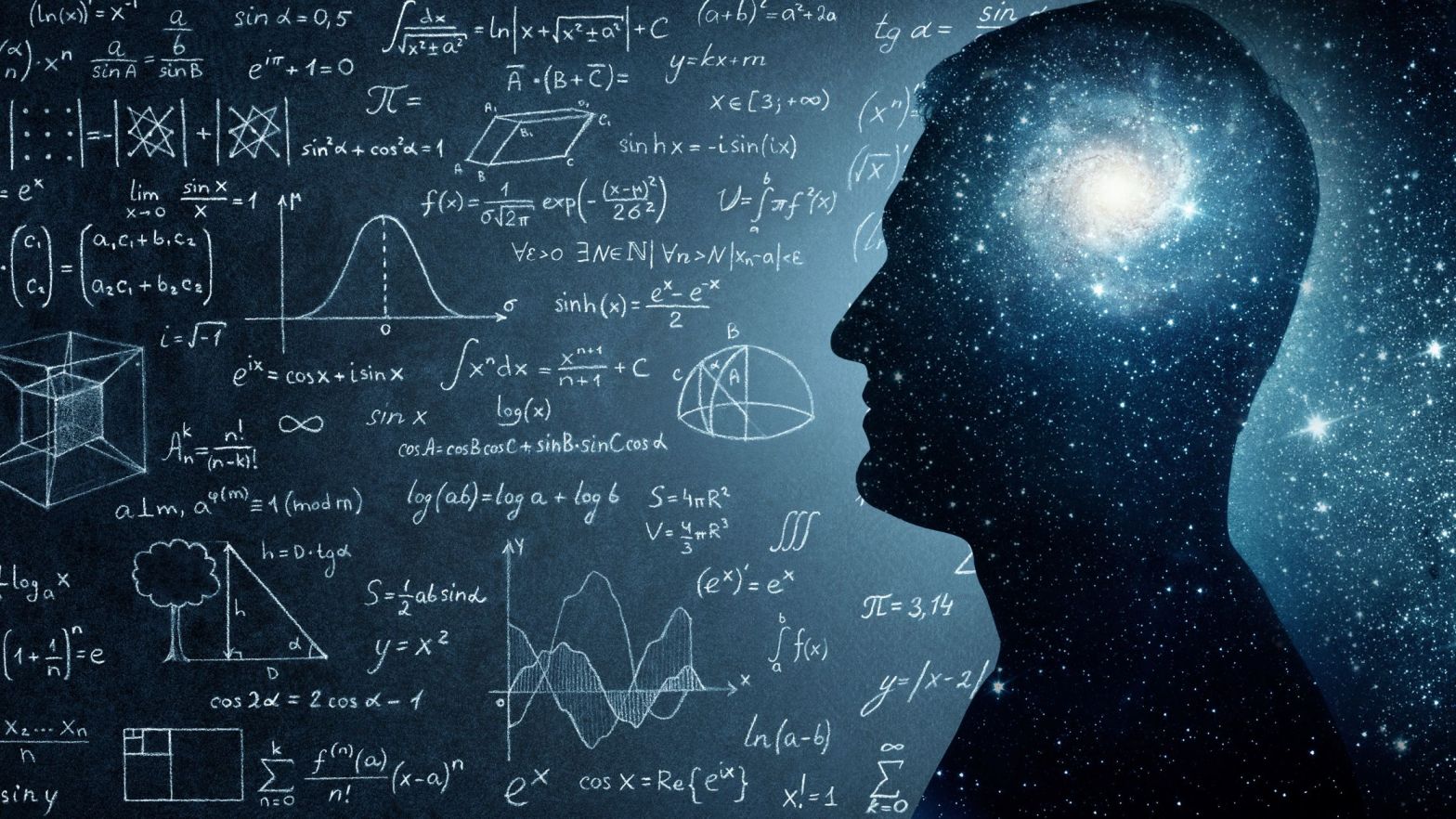
A Cosmos of Flesh and Fire
“Look at one human brain—every science is a universe. You might not be able to see it all, but you can see everything that’s there.”
The brain weighs about 1.3 kilograms. Soft tissue. Fat, blood, and firing cells. And yet within it exists everything: memory, identity, grief, mathematics, poetry, politics, love. It is both fragile and infinite. To look at a brain is to look at something that contains all of us, and perhaps more than we can ever measure.
Modern science keeps mapping it—neuroscience, psychiatry, artificial intelligence—yet the closer we get, the more mysterious it feels. The paradox is simple: the brain is both the thing we study and the thing doing the studying. We hold the telescope and the stars all at once.
The Brain as Universe
On average, the human brain has 86 billion neurons, each capable of making up to 10,000 connections. That’s nearly a quadrillion synapses—numbers that echo the stars. Astrophysicists comparing 3D maps of galaxies with simulations of brain networks found striking structural similarities.
Neurons and galaxies cluster along filaments, nodes, and voids, following physical laws of efficiency and energy distribution.
The result? A literal image of the brain as cosmos. The Milky Way might be mirrored in your mind.
But unlike the cosmos, the brain isn’t an external expanse. It’s internal, folded in silence beneath the skull. If telescopes let us map billions of light-years, brain scans let us trace milliseconds of firing neurons. Both remind us of scale—immensity hidden in something so small.
Philosophers from Aristotle to William James imagined the mind as containing worlds. Neuroscience today confirms what poets guessed: the brain is not a simple organ but a multiverse of processes, spanning every scientific discipline we know.

Every Science in One Organ
Think of the sciences. All of them live inside the brain.
- Physics. Electrical impulses run along axons; magnetic resonance reveals fields of energy. Some physicists speculate quantum mechanics may play a role in consciousness itself—a controversial but enduring hypothesis.
- Chemistry. Neurotransmitters like serotonin, dopamine, and GABA regulate everything from joy to despair. Each chemical reaction, each synapse, is a laboratory experiment happening billions of times a second.
- Biology. The brain carries evolutionary history. The reptilian brain governs survival reflexes, the limbic system emotions, the neocortex reasoning and imagination. We are evolution stacked in layers.
- Psychology. Here live memory, trauma, habit, creativity. Behavioral patterns rise not just from environment but from neuronal scripts written deep in development.
- Computer Science. Neural networks in artificial intelligence borrow their architecture from us. Machine learning is a pale echo of the algorithms of synaptic plasticity. Studying brains has built our machines; now machines are helping us study brains.
- Philosophy & Theology. Consciousness, free will, the mind-body problem, the soul. These questions don’t leave the lab; they expand it. The so-called “hard problem of consciousness”—why physical processes create subjective experience—remains unsolved.
To look at a single brain is to stand in a library of sciences, each aisle crowded with experiments, equations, and existential questions.
The Limits of Knowing
Here’s the paradox: we can see almost everything in the brain, but we can’t see what matters most.
Functional MRIs map blood flow. Connectomics traces wiring diagrams. Neural implants decode patterns to move prosthetic limbs. But consciousness—the inner voice, the feel of red, the memory of your mother’s laugh—remains opaque.
“You cannot see it all, but you can see everything that’s there.” The biology is complete, the wiring tangible. Yet the experience is absent. Science can chart the architecture but not the tenant.
This is the enduring tension: the brain is object and subject. We dissect it as if it were stone, forgetting it is also the stonecutter. We study its maps while it is the cartographer.
No other science faces this mirror. Physics does not contain itself. Chemistry doesn’t weep while mixing. But neuroscience must confront its own recursion: the brain studying the brain.

Echoes in Literature & Faith
Writers and mystics intuited long before imaging machines. Dostoevsky’s characters wrestled with the ungovernable storms of thought. Toni Morrison wrote of memory as a haunting cosmos. Poets from Blake to Borges imagined infinity folded into human perception.
Faith traditions echo this intuition: the “inner world” as infinite, the soul as cosmos. The Kabbalists taught of worlds mirrored within the human form. Buddhist philosophy compares the mind to a boundless sky. Christian mystics speak of the “kingdom within.”
Robert Parsons’ own Joseph’s Letter circles this theme. Michael Battersby’s grief is not just an emotion—it is a cosmos. The loss of his wife collapses his inner universe, sending him searching not just for proof of the divine, but for a coherence big enough to hold his sorrow.
When we speak of brains as universes, we’re not merely being metaphorical. We’re acknowledging that each consciousness is vast enough to mirror creation itself.
Why This Matters Now
In 2025, this isn’t just philosophy. It’s politics, ethics, technology.
- Artificial Intelligence. Neural networks—modeled on us—now generate language, art, and strategies. But they don’t “feel.” That gap matters. A machine may simulate consciousness, but the qualia—the inner texture of thought—remains unreachable.
- Neurotechnology. Brain-computer interfaces promise treatment for paralysis and memory loss, but they also raise questions: what happens when minds are hacked? Who owns your thoughts when they can be translated into data?
- Mental Health. Depression, anxiety, trauma—each is both neurochemical and existential. Seeing the brain as universe reminds us these aren’t just “disorders” but complex constellations of biology, story, and experience.
- Climate & Society. Indigenous traditions remind us: consciousness is relational. If each mind is a cosmos, then empathy is astronomy—learning to see other skies as real as our own.
Understanding the brain as universe pushes us to humility. Every human encounter is a meeting of galaxies. Every act of cruelty is a collision. Every act of kindness, a form of cosmic alignment.
Section 6: The Brain as Mirror of Mystery
Science reveals; mystery remains. The Shroud of Turin, whether relic or forgery, still captivates because it symbolizes the same tension: proof versus faith, evidence versus meaning. The brain embodies that paradox.
We can chart synapses but not love. We can trace dopamine pathways but not hope. We can measure the limbic system but not soul.
This doesn’t negate science—it deepens it. The recognition that knowledge has edges doesn’t weaken inquiry; it protects wonder. The astronomer who gazes into galaxies is not less a scientist because she feels awe. The neuroscientist who maps the brain’s circuits is not less rigorous for admitting mystery.
The universe inside the brain is both map and mirage. We are compelled to keep exploring, knowing that what matters most might always shimmer just beyond measurement.
Conclusion: An Invitation to Wonder
Look again: one brain, 86 billion neurons, a quadrillion synapses. Inside it: poetry and politics, prayer and physics, sorrow and song. To dismiss the brain as tissue is like dismissing the night sky as scattered gas. True, but incomplete.
The brain is universe not because it contains galaxies but because it contains everything that makes galaxies matter to us. Love. Memory. Meaning.
If each human carries a cosmos, then how should we treat one another? Perhaps with the reverence we give to stars. Perhaps with the awe we bring to telescopes. Perhaps with the humility of knowing that to harm a mind is to collapse a universe.
In Joseph’s Letter, Michael Battersby searches not just for truth but for coherence after loss. That’s the task we all inherit. To search our inner cosmos. To map what can be mapped, and honor what can’t.
Because maybe the point is not to see it all. Maybe the point is to know that everything worth seeing is already there.
Download the first chapter free today
References & Further Reading
- Azevedo, F. A., et al. (2009). Equal numbers of neuronal and nonneuronal cells make the human brain an isometrically scaled-up primate brain. J Comp Neurol.
- Vazza, F., & Feletti, A. (2017). Quantitative comparison between the neuronal network and the cosmic web. Frontiers in Physics.
- American Psychological Association (2024). The hard problem of consciousness revisited.
- Fox, J. (2023). A World Survey of Religion and the State. Cambridge University Press.
- Australian Human Rights Commission (2022). 65,000 years: Aboriginal and Torres Strait Islander cultures.
- McGilchrist, I. (2021). The Matter With Things: Our Brains, Our Delusions, and the Unmaking of the World.
- Parsons, R. (2025). Joseph’s Letter.
 Robert Parsons