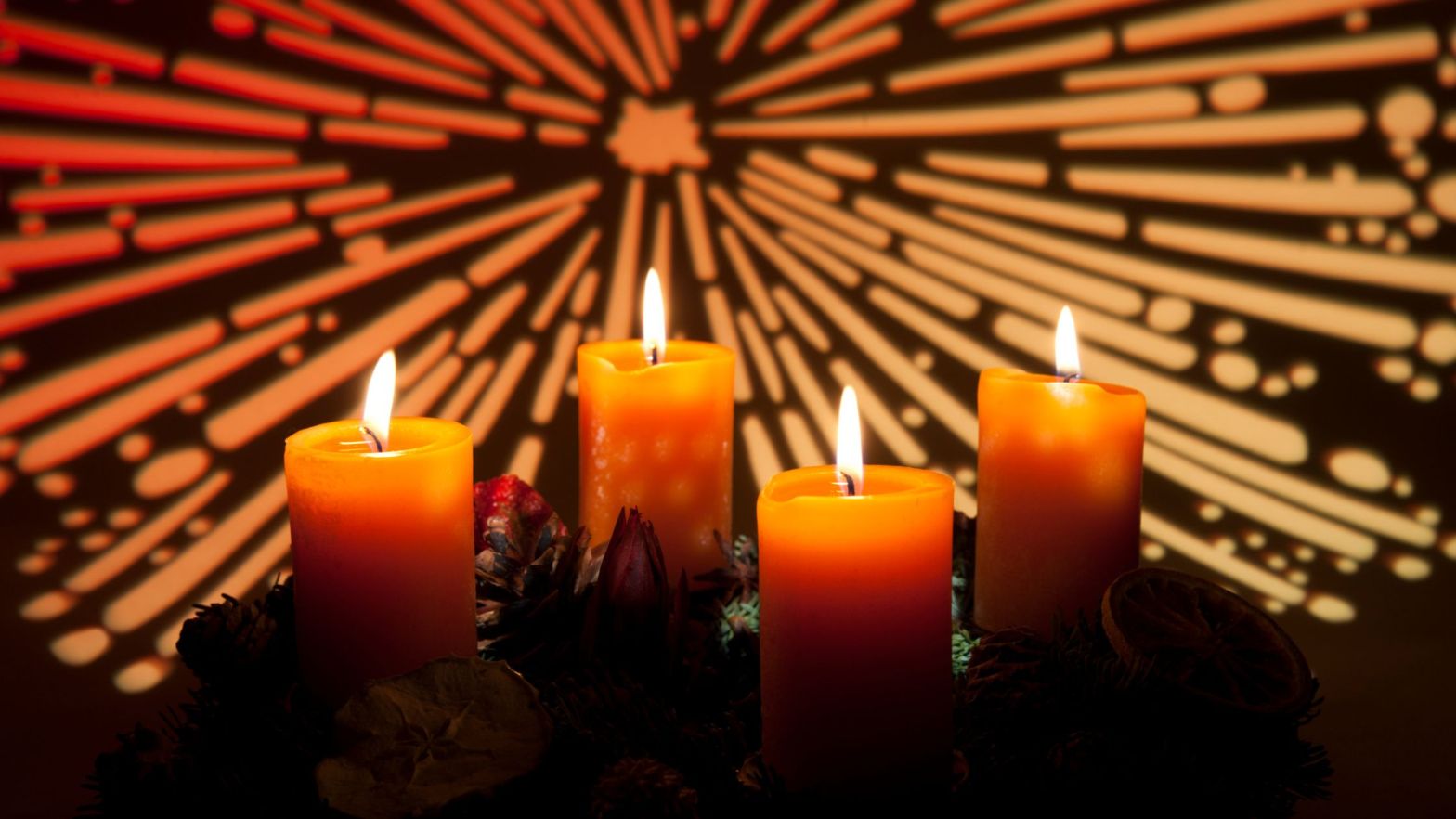
Every December, Christians around the world light candles in the dark.
One candle, the first Sunday of Advent. Two to the second. Three the third. Four by the final Sunday before Christmas.
But here’s what most people miss: Advent isn’t about counting down to a celebration. It’s about sitting in the darkness and learning to wait.
In a world that demands instant answers, immediate gratification, and algorithmic certainty about everything from what to watch to what to believe, Advent offers something radically different: permission not to know. Permission to wait. Permission to let faith exist in the tension between hope and uncertainty.
And in 2025, as institutions crumble, as trust erodes, as traditional certainties dissolve, perhaps we need Advent’s wisdom more than we realize.

What Advent Actually Means (And Why We’ve Forgotten)
Advent comes from the Latin adventus, meaning “coming” or “arrival.” For four weeks before Christmas, Christians prepare for the celebration of Christ’s birth while also anticipating his promised return.
But somewhere between medieval liturgy and modern consumer culture, we’ve lost the plot.
Advent has become background noise to Christmas shopping. A countdown to presents and parties. Four weeks of festive buildup to a single commercialized day.
The candles still get lit. The wreaths still get hung. But the practice of spiritual waiting? The acknowledgment that we exist in darkness, longing for light? That’s been sanitized, streamlined, and stripped away.
Here’s what the original practice understood: faith doesn’t require certainty. It requires the willingness to wait in uncertainty.
That’s not a weakness. That’s a strength.
Why Waiting Feels Impossible in 2025
We live in the age of instant everything.
Questions? Google it. Lonely? Swipe right. Bored? Scroll. Uncertain about your beliefs? Here’s an algorithm-curated echo chamber that will confirm exactly what you already think.
We’ve engineered waiting out of existence.
But faith, real, honest, transformative faith, can’t be downloaded, streamed, or delivered in two days with Prime shipping.
In Joseph’s Letter, Michael Battersby spends the entire novel waiting. Waiting for proof that the Shroud of Turin is authentic. Waiting for evidence that Margaret still exists somewhere beyond death. Waiting to know if love survives or if grief is just our refusal to accept that it doesn’t.
He searches the Vatican archives. He follows leads across continents. He risks everything for an answer.
But the waiting, the uncertainty, the darkness, the not knowing, that’s where his faith actually lives.
Not in the destination. In the journey.
Darkness Isn’t the Absence of Faith: It’s Where Faith Begins
Advent starts in the dark for a reason.
The first candle is lit not because we’ve arrived at certainty but because we’re acknowledging we haven’t. We light one small flame and admit: we’re still searching. We’re still waiting. We don’t have all the answers yet.
And that’s okay.
Modern Christianity, especially in Western evangelical traditions, has created a dangerous myth: that strong faith means unwavering certainty. That real believers never doubt. That if you’re questioning, you’re failing.
But history tells a different story.
Saint John of the Cross wrote about the “dark night of the soul”, the spiritual experience of feeling abandoned by God. He didn’t frame it as failure. He framed it as a transformation.
Mother Teresa‘s private letters, published after her death, revealed decades of spiritual darkness. She served millions while feeling spiritually empty. And yet, she continued.
The mystics, the contemplatives, the spiritual giants throughout history, they didn’t avoid darkness. They walked through it. They sat with it. They let it transform them.
Advent is the liturgical recognition of this truth: light is only meaningful because darkness exists. Faith is only powerful because doubt is real.
What Michael Battersby Teaches Us About Spiritual Waiting
Michael Battersby doesn’t start Joseph’s Letter as a man of unwavering faith. He starts as a man undone by grief.
Margaret’s death shatters his world. The comfortable certainties of Catholic tradition, resurrection, eternal life, and reunion in heaven suddenly feel hollow. He wants to believe them. Desperately. But belief without evidence feels like lying to himself.
So he searches.
He pursues Joseph’s Letter, a document that might prove the Shroud of Turin is authentic, which might provide historical evidence of resurrection, which might confirm that Margaret isn’t just gone.
But here’s what the novel understands: the search itself is the spiritual practice.
Michael doesn’t find neat answers. He doesn’t arrive at certainty. What he finds is the courage to keep searching, to keep questioning, to keep hoping even when proof remains elusive.
That’s Advent.
That’s faith in the 21st century.
Not certainty. Not proof. Just the willingness to light one small candle in the dark and wait.
We don’t claim to have all the answers—but we’re asking the questions institutions don’t want asked.

The Four Candles: A Framework for Modern Faith
Traditional Advent wreaths include four candles, each representing a different theme. Let’s reframe them for 2025:
Candle 1: Hope in the Unknown
The first candle is lit when we have the least certainty. Christmas is four weeks away. The darkness is deepest. But we light the candle anyway.
Modern application: Can you have hope without knowing the outcome? Can you trust the process even when you can’t see the destination?
In a world obsessed with predictability, lighting this candle is an act of rebellion.
Candle 2: Peace in the Waiting
The second candle represents peace, not the absence of struggle, but the presence of calm within it.
Modern application: Can you find peace in not having all the answers? Can you sit with uncertainty without spiraling into anxiety?
Michael Battersby searches desperately, but the moments of peace in Joseph’s Letter come when he stops fighting the uncertainty and simply allows himself to exist within it.
Candle 3: Joy in the Journey
The third candle celebrates joy, not happiness dependent on circumstances, but joy rooted in something deeper.
Modern application: Can you find joy in the search itself, even if you never find what you’re looking for?
This is perhaps the hardest lesson. We’ve been taught that joy comes from achieving, acquiring, and arriving. Advent says joy exists in the waiting.
Candle 4: Love That Transcends Understanding
The fourth candle represents love, the love that motivated the incarnation, the love that survives death, the love that makes grief so devastating and so sacred.
Modern application: Can you love someone and still question everything they believed? Can you honor their memory while building your own faith?
Michael’s love for Margaret drives his entire search. He’s not trying to prove her wrong or prove himself right. He’s trying to honor the depth of their connection by refusing to accept easy, comforting lies.
Why Institutions Want You to Skip Advent and Jump to Christmas
Here’s an uncomfortable truth: religious institutions don’t always love the messy, uncertain spirituality that Advent represents.
Certainty is easier to package. Doctrine is easier to control. Unquestioning belief is easier to monetize.
Advent asks believers to sit with darkness, doubt, and waiting. That’s dangerous to institutions that derive power from claiming to have all the answers.
Christmas, with its clear narrative, its celebratory joy, its commercial possibilities, is much safer.
But Advent? Advent is where the real spiritual work happens.
In Joseph’s Letter, the Vatican becomes the antagonist not because the Catholic Church is inherently evil, but because institutions prioritize self-preservation over truth. When Michael’s search threatens to expose uncomfortable realities about the Shroud of Turin, the institution’s response is to suppress, to silence, to protect the narrative.
Because uncertainty is dangerous to power.
But it’s essential to faith.
How to Practice Advent in a World That’s Forgotten How to Wait
If you’re reading this and thinking, “I’m not religious, why does Advent matter to me?” here’s why:
You don’t have to be Christian to benefit from the practice of waiting in darkness.
You don’t have to believe in Christ’s literal return to recognize the value of sitting with uncertainty instead of demanding immediate answers.
You don’t have to light liturgical candles to practice spiritual patience.
Here’s how to engage with Advent’s wisdom, regardless of your beliefs:
1. Identify What You’re Waiting For
What question are you carrying? What uncertainty keeps you up at night? What do you wish you knew but don’t?
Write it down. Name it. Acknowledge that you’re in the dark about it.
2. Resist the Urge to Force an Answer
You don’t have to solve it today. This week. This month.
Practice saying: “I don’t know yet. And that’s okay.”
3. Light One Metaphorical Candle
What’s one small action you can take that honors the search without demanding resolution?
For Michael, it’s following one lead. For you, it might be reading one book. Having one honest conversation. Asking one hard question.
4. Sit With Others in the Darkness
You’re not the only one who doesn’t have it figured out. Find community with other seekers. Other questioners. Other people are brave enough to admit uncertainty.
Joseph’s Letter readers often share that the book gave them permission to voice doubts they’d been carrying for years. That’s the power of shared darkness.
Reflection Questions: Where Are You Waiting?
💭 What certainty have you lost that you wish you could get back?
Sometimes grief isn’t about losing a person. It’s about losing the comfort of not questioning.
💭 What would it mean to stop demanding immediate answers and practice patient seeking instead?
What if the search is the point, not the arrival?
💭 Where in your life are you pretending to have certainty when you actually don’t?
Who would you disappoint if you admitted you’re not sure?
💭 What’s one small candle you can light in your own darkness this week?
Not a solution. Not an answer. Just one small step forward in the uncertainty.
💭 Who taught you that doubt was the enemy of faith?
And what if they were wrong?
The Invitation: Enter the Darkness
Joseph’s Letter doesn’t promise you answers.
It doesn’t resolve every question about faith, doubt, grief, or the afterlife.
What it offers is something rarer and more valuable: a companion in the darkness.
Michael Battersby’s search mirrors the journey many of us take when life forces us to question everything we thought we knew. It’s a thriller, yes. But it’s also a spiritual practice, a meditation on what it means to have faith when certainty is stripped away.
If you’re tired of books that offer easy answers and comfortable certainties, if you’re looking for a story that honors the complexity of belief and the courage of doubt, this is for you.
📖 Download the first chapter free and step into a narrative that treats your questions with the seriousness they deserve.
Join the Conversation About Faith in Darkness
Advent is only four weeks, but the practice of waiting in uncertainty lasts a lifetime.
If this post resonated with you:
✅ Subscribe to our newsletter for monthly reflections on faith, doubt, and spiritual authenticity
Because the journey through darkness is better when we walk it together.
About the Author:
Robert Parsons is the author of Joseph’s Letter, a novel exploring grief, faith, and the search for truth in a world of comfortable lies. After decades of teaching religion to adolescents, Robert understands that the deepest faith often emerges from the darkest doubts. His mission is simple: encourage people to think outside the box about religion, embrace uncertainty as part of spiritual growth, and light candles in the darkness even when they’re not sure what they believe.
 Robert Parsons