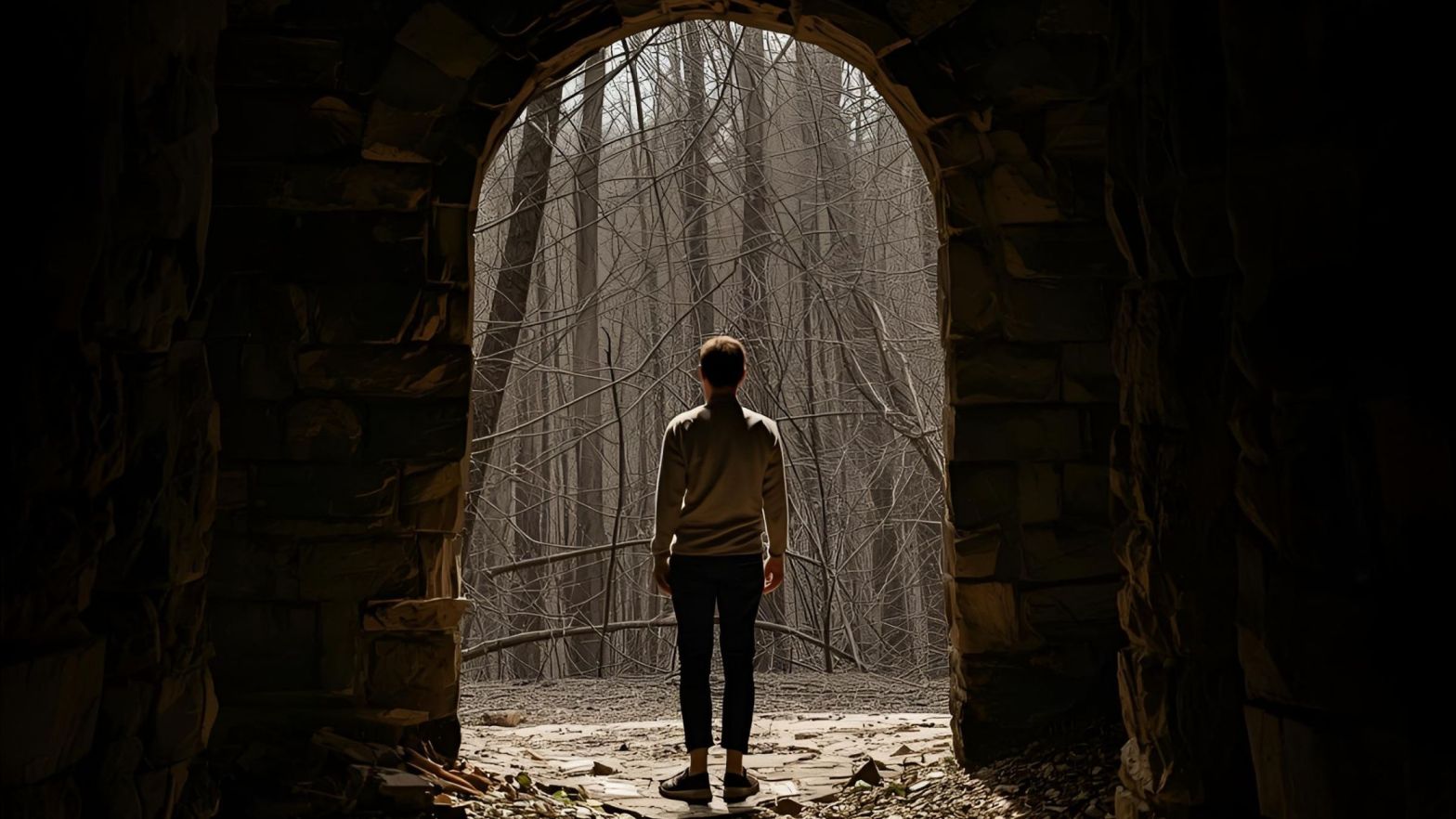
December 31st. The threshold between years.
Behind you: 2025 with all its questions, all its losses, all its moments when what you believed was tested and sometimes broken.
Ahead: 2026. Unknown. Uncertain. Full of possibility or dread, depending on your perspective.
You’re standing in the doorway. One foot in the past, one foot in the future.
This is a threshold moment. And threshold moments demand a particular kind of courage: the willingness to look honestly at what you’re leaving behind and what you’re choosing to carry forward.
For many of us, 2025 didn’t just test our circumstances. It tested our faith. Not just religious faith, but faith in institutions, in systems, in people, in the stories we’ve told ourselves about how the world works and what we believe.
Some of that faith survived. Some of it didn’t.
And now, at the threshold, you have to decide: What version of faith, what version of yourself, crosses into the new year?
What Makes a Threshold Moment Sacred
Humans have always recognized the power of thresholds.
In architecture, thresholds separate sacred from profane, inside from outside, private from public.
In mythology, heroes cross thresholds into the underworld, into other realms, into transformation.
In religious ritual, thresholds mark transitions: baptism (birth to new life), marriage (single to partnered), death (life to whatever comes next).
Thresholds are liminal spaces. You’re no longer who you were, but not yet who you’ll become.
And that in-between space? It’s uncomfortable. Uncertain. Sometimes terrifying.
But it’s also where transformation happens.

The Threshold Michael Battersby Faces
In Joseph’s Letter, Michael Battersby stands at multiple thresholds.
The Threshold of Grief
Margaret’s death leaves him suspended between his old life (married, certain, hopeful) and an unknown future (alone, questioning, desperate for proof that love survives).
He can’t go back. But he doesn’t know how to move forward.
So he searches. He pursues Joseph’s Letter, a document that might provide historical evidence of resurrection. If he can prove the Shroud of Turin is authentic, if he can confirm that the resurrection happened, then maybe he can believe Margaret isn’t just gone.
The Threshold of Faith
But the search forces Michael to confront uncomfortable questions:
What if the institution protecting these secrets has been lying?
What if the evidence is inconclusive?
What if faith can’t be proven, only chosen?
He’s caught between the comfortable faith he inherited (accept what the Church teaches) and an authentic belief that might be messier, more uncertain, but more honest.
The Threshold of Identity
Michael begins the novel as a grief-stricken widower. But through his search, he becomes something else: a seeker. A questioner. Someone willing to risk everything for the truth.
That transformation happens at the threshold. In the uncertainty. In the not-knowing.
The Faith You Inherited vs. The Faith You Build
Let’s talk about inherited faith.
Most of us didn’t choose our first beliefs. We absorbed them.
From parents. From the community. From culture. From institutions.
Maybe you grew up Catholic and never questioned transubstantiation until adulthood.
Maybe you inherited Protestantism’s “faith alone” doctrine without examining it.
Maybe you absorbed secular materialism from academia without realizing it’s also a belief system.
Inherited faith isn’t bad. But it’s also not examined.
And at some point, often triggered by crisis, loss, or disillusionment, you reach a threshold where inherited faith no longer suffices.
You start asking questions:
– Do I actually believe this, or do I just believe I’m supposed to believe it?
– Does this align with my lived experience, or am I maintaining cognitive dissonance?
– If I could rebuild my faith from scratch, what would I keep and what would I discard?
This is terrifying. Because on the other side of that threshold, you don’t know what your faith will look like.
But it’s also liberating. Because whatever faith you build, even if it’s smaller, messier, more uncertain than what you inherited, it will be yours.
What 2025 Tested (And What Survived)
Think back over 2025. What got tested?
Trust in Institutions
Maybe you watched religious leaders defend the indefensible.
Maybe you saw political systems prioritize power over people.
Maybe you realized corporations, media, or social structures you trusted were corrupt.
Question: Will you carry institutional trust into 2026, or rebuild it with higher standards?
Certainty About Beliefs
Maybe you experienced doubt for the first time.
Maybe you questioned doctrines you’d never examined.
Maybe you realized you don’t actually believe everything you claim to believe.
Question: Will you carry unexamined certainty into 2026, or embrace honest uncertainty?
Faith in People
Maybe someone you trusted betrayed that trust.
Maybe a mentor, friend, or leader revealed themselves to be less than you believed.
Maybe you learned that people are more complex, more flawed, more human than your idealized version.
Question: Will you carry cynicism into 2026, or rebuild trust with wisdom?
Belief in Your Own Story
Maybe you thought you’d be further along by now.
Maybe you thought you’d have more figured out.
Maybe you thought your faith journey would be cleaner, more linear, more certain.
Question: Will you carry shame about your questions into 2026, or accept that the journey is the point?
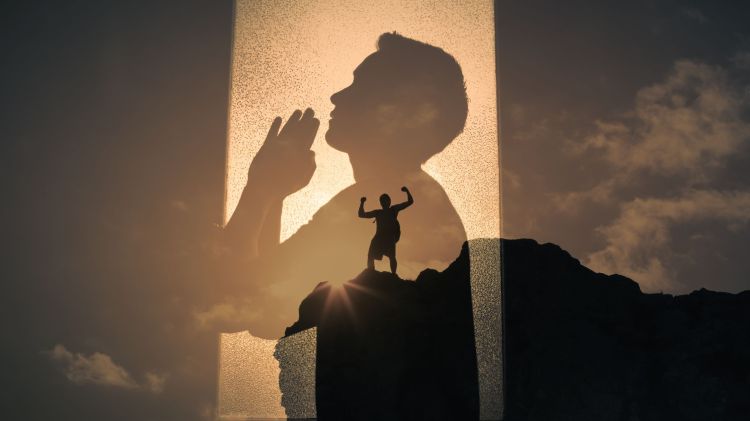
The Courage to Leave Things Behind
Standing at the threshold means making choices.
Not everything crosses with you. Some things have to be left behind.
Leave Behind: Certainty That Was Never Real
If 2025 taught you that you don’t have all the answers, good.
Carry forward: Honest uncertainty. The willingness to say “I don’t know” without shame.
Leave Behind: Loyalty to Institutions That Don’t Deserve It
If 2025 showed you that an institution you trusted prioritizes power over truth, stop defending it.
Carry forward: Discernment. The ability to love a tradition while holding its leaders accountable.
Leave Behind: Performance of Faith
If you’ve been performing certainty you don’t feel, stop.
Carry forward: Authenticity. Even if your faith is smaller, let it be real.
Leave Behind: Shame About Doubt
If you’ve been ashamed of your questions, release that.
Carry forward: Pride in your willingness to question. It’s courage, not weakness.
Leave Behind: The Need for Tidy Answers
If you’ve been demanding a resolution to every question, let that go.
Carry forward: Comfort with mystery. Peace with not knowing.
What to Carry Forward Into 2026
But threshold moments aren’t just about release. They’re also about intention.
What do you want to carry into the new year?
Carry Forward: Questions Worth Living
Rainer Maria Rilke wrote: “Live the questions now. Perhaps you will then gradually, without noticing it, live along some distant day into the answer.”
What questions are you living into?
– What does authentic faith look like for me?
– How do I build belief that can withstand scrutiny?
– What do I want to be true about life, death, and meaning?
Don’t rush to answer them. Carry them forward. Live into them.
Carry Forward: Relationships That Survived Testing
2025 tested relationships. Some broke. Some bent but held.
The ones that held? The people who stayed when you questioned, who didn’t demand certainty from you, who honored your search?
Carry them forward. Invest in them. They’re rare.
Carry Forward: The Parts of Faith That Feel True
Even if you’re questioning everything, some things probably still resonate.
Maybe you’re not sure about institutional religion, but love still feels sacred.
Maybe you’re uncertain about doctrines, but community still matters.
Maybe you’re questioning theology, but compassion still compels you.
Carry forward what feels true. Even if it’s small. Even if it’s provisional.
Carry Forward: Your Willingness to Search
Michael Battersby doesn’t find perfect answers in Joseph’s Letter. But he finds something more valuable: the courage to keep searching.
That courage? Carry it forward.
Carry Forward: Hope That Isn’t Dependent on Certainty
This is the hardest one.
Can you hope without knowing?
Can you believe without proof?
Can you trust that meaning exists even when you can’t define it?
That kind of hope, fragile, uncertain, but persistent, is the most resilient faith there is.
Ritual for the Threshold: A Year-End Practice
If you want to mark this threshold moment intentionally, try this:
1. Write Down What You’re Leaving Behind
On a piece of paper, list:
– Beliefs you no longer hold
– Certainties that were illusions
– Shame you’re releasing
– Institutions you’re no longer defending
2. Burn It (Or Tear It Up)
Literally. Symbolically release it.
You’re not erasing your past. You’re acknowledging what you’re choosing not to carry forward.
3. Write Down What You’re Carrying Forward
On a new piece of paper, list:
– Questions you’re living into
– Values you’re committing to
– Relationships you’re investing in
– Small truths that feel authentic
4. Place It Somewhere You’ll See It
This isn’t a resolution. It’s a reminder.
When 2026 tests you (and it will), you’ll need to remember what you chose to carry across the threshold.
5. Light a Candle
One small light in the dark.
You don’t know what 2026 holds. But you know you’re willing to search. To question. To hope.
That’s enough.
Reflection Questions: What Will You Choose?
💭 What belief died in 2025 that you’re still grieving?
It’s okay to mourn what you’ve lost, even if it was an illusion.
💭 What question are you most afraid to ask?
What would happen if you asked it anyway?
💭 Who in your life has earned your trust by staying through your doubts?
Have you told them?
💭 If you could carry only three things into 2026, three values, three commitments, three beliefs, what would they be?
Everything else is negotiable.
💭 What would it mean to define success in 2026 not by answers but by the quality of your questions?
Can you be proud of your search even if you never arrive?
The Threshold Is Sacred
Joseph’s Letter ends ambiguously. Michael doesn’t get perfect resolution. He doesn’t find incontrovertible proof.
But he finds something more important: the willingness to live in uncertainty with integrity.
That’s what threshold moments demand.
You don’t get to know what’s on the other side before you cross. You just have to decide: Will I cross with courage? With honesty? With hope?
The new year is coming whether you’re ready or not.
But you get to choose what version of yourself, what version of faith, what version of hope crosses that threshold.
Choose wisely. Choose honestly. Choose with courage.
📖 Download the first chapter of Joseph’s Letter and walk with Michael through his threshold moment.
👉 Get Your Free Chapter Here
Join the Conversation About Faith in Transition
Standing at thresholds is easier when you’re not alone.
If this post resonated with you:
✅ Leave a comment sharing what you’re leaving behind and what you’re carrying forward
Because transformation happens at thresholds. And thresholds are better crossed together.
About the Author:
Robert Parsons is the author of Joseph’s Letter, a novel exploring what happens when grief forces you to question everything you thought you believed. After decades of teaching religion and watching students navigate their own threshold moments, Robert understands that authentic faith is built, not inherited.
His mission is simple: encourage people to think outside the box about religion, embrace uncertainty as part of growth, and have the courage to rebuild belief from the ground up when inherited faith no longer fits.
 Robert Parsons