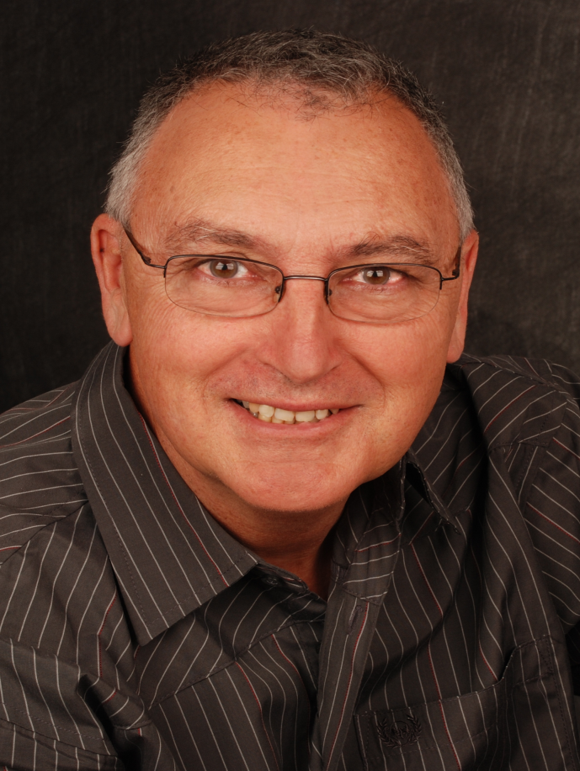
Robert grew up in the 1950s and 1960s on the developing urban edges of Sydney, and in several other parts of N.S.W. and Victoria, Australia. He attended 10 schools, Catholic and State. In his early career days, he worked for the N.S.W. legal system and for the Commonwealth. For a while he trained as an officer in the Army. When a family tragedy interrupted his life, he decided to try teaching because he thought it would provide opportunity to really assist young people to succeed.
Robert has done educational studies in several countries, including in the United States and it is not hard to understand why he has had a lifetime interest in religion. Apart from the fact that his is related to a very important person involved in the Church of England (more about that later), from a very young age he found it difficult to simply believe what people were saying about their God. More often than not this was because they were not very good at displaying the values they were talking about.
His parents’ religious backgrounds were a mixed bag. His mother’s family were Catholic and Lutheran. His father’s religious grounding was probably a bit of Hinduism mixed up with Catholic (from India) and Anglican.
As an eight-year-old, for three weeks straight, he wagged from his Catholic De La Sale Brothers school and his parents then sent him to the local State school. He has often wondered if there is a forgotten secret behind why his parents allowed him so easily to transfer to the local State school. He does have a vague memory of telling his parents about a brother at the school sitting boys on his lap. Families were good on secrets in those days.
His mother was a devoted Catholic and his father always insisted that he went to the Catholic Mass on Sunday. At least this lasted until he was about 14 and he started to make decisions about religion for himself.
His father never had anything to do with the Church himself. Even when Robert made his First Holy Communion at age 7, his father wandered off before everyone went into the Church and spent the time in a shop buying Robert a toy model car. Many years later, his father explained the reason why he found it difficult to enter a Catholic Church. Their second child was a girl called Janice Marie who only lived for three days. The local Catholic priest would not provide a funeral for her because she had not been baptised. In fact, the Anglican priest offered to perform a burial service for her.
Later, as a 10-year-old, Robert attended Boys’ Town (a reform school run by the Salesians) because the rector (Joseph Ciantar) told his father that Boys’ Town needed boys from good families to be a positive influence on the other boys. Robert recollects this as a very brutal institution which managed to produce at least one serial killer. He also recollects that the same Father Ciantar was a notoriously poor driver who ran over his younger sister when she and Robert were walking along the road one afternoon after school. The priest was hopeless in this situation and as an eleven- year-old, Robert had to pick his unconscious sister up off the road and give the priest instructions to get help, although he actually believed that she was dead.
Robert attended a Marist Brothers school next to Kings Cross in Sydney City for his first year of high school after Boys’ Town. It took two bus changes and two train changes to reach the place and two hours traveling each way. Even so, Robert is happy to admit that sometimes he was late home from school after wandering around Kings Cross looking in the ‘shop’ windows. (Any who knows what the main industry was at Kings Cross will know why a young boy would have like what was on display in the windows.)
In the days when Robert decided to become a teacher, it was possible to enter the Catholic system with very little (and sometimes no) qualifications. Although he now has a bachelor’s degree and three post-graduate degrees, he started teaching with only two first year university subjects on the resume. It was a multi-cultural Marist Brothers school in Western Sydney, and he found the use and abuse of corporal punishment abhorrent. By 1979 he had found several like-minded people, including Senator Ken Wriedt and a Jordan Riak with whom he collaborated to begin the process of abolition of corporal punishment in Australian schools, state by state. (Jordan, a American, later returned to his home country and worked to have corporal punishment abolished there). Part of this process was the production of a 16mm film “Who Cares” designed to expose the abuse of street kids in Sydney and the physical abuse in schools. (The digital version of this is available at Who Cares% ).
At one stage he was interested in gaining a seat in Federal Parliament (defeated in pre-selection) but Robert’s main interest other than teaching has been writing. His first manuscript was about growing up and might have been a challenge to “Puberty Blues” had it not been for very poor advice that he was too young to be a published author. His second manuscript was written around the concept of adolescents fighting back against being bashed and abused in schools.
It might say a lot about the young Robert to mention the book he wrote because as a 14/15-year-old he constantly heard young girls screaming from the old gaol he lived opposite in a N.S.W. country town. In the story (Girls’ Town) some boys from the town try to rescue the girls and that is exactly what Robert and his mates would have done if they knew about the horrible things that were being done to the young girls.
One day his wife, an ex-student of a Mercy Nuns boarding school happened to mention her experiences going on trips with other girls in the parish priest’s car. She said everyone knew not to be the last girl in the car with him, although sometimes this was unavoidable. This was around the same time the Boston Globe was revealing the horrendous information about Church schools in the United States. It was this information which led to the story Madigan Perry’s Luck. It was a combination of her experience, his own journey through the education system and information from contacts who also had experience in the Catholic system, that ultimately formed this exposition of seriously corrupted experiences for many young people. The publication of Madigan Perry’s Luck began the process towards the “Royal Commission into Institutional Child Abuse” in Australia a few years later than America – but at least it got going.
Robert has three daughters and lots of grandchildren.
Oh, and his connection to an important person in the Church of England? His 15th Great Grandfather was King Henry VIII, although one would never be sure that this is anything to be proud of, maybe it adds something genetic to his interest in religion. Maybe?


 Robert Parsons