Christmas Beyond Commercialism: Reclaiming the Radical Story We’ve Forgotten

December 21st, 2025. The winter solstice. The longest night of the year in the Northern Hemisphere.

For thousands of years, humans have marked this moment not with fear but with celebration. Because while December 21st is the darkest day, it’s also a turning point: from here forward, the days grow longer. Light begins its slow return.

Christians light Advent candles and celebrate Christ’s birth. Jews light the menorah for eight nights of Hanukkah. Ancient pagans lit bonfires for Yule. Romans honored Sol Invictus, the “unconquered sun.” Persians celebrated Yalda. Indigenous cultures worldwide marked the solstice with ceremony and firelight.

Same season. Same symbolism. Different stories.

What if the deepest truths transcend any single tradition? What if the search for light in darkness is the most universal human experience we have?

And what does that mean for how we understand faith, belief, and the stories we inherit?

The Winter Solstice: Nature’s Darkest Moment

Let’s start with the science, because the science is profound.

Earth’s axis tilts 23.5 degrees. As we orbit the sun, this tilt means that for half the year, the Northern Hemisphere leans toward the sun (summer), and for half the year, it leans away (winter).

The winter solstice occurs when the North Pole is tilted farthest from the sun. The result: the shortest day and longest night of the year.

For ancient peoples without electric lights, without central heating, without the technological buffers that insulate modern humans from nature’s rhythms, this was existential.

Would the sun return? Would warmth come back? Would crops grow again?

They didn’t have astrophysics to reassure them. They had observation, tradition, and faith.

So they lit fires. They told stories. They created rituals to mark the turning point, the moment when darkness reaches its peak and light begins its return.

Every major religion grew from cultures that needed to make meaning of this moment.

christian christmas

Christmas: The Christian Response to Darkness

Let’s address the obvious: Jesus was not born on December 25th.

Biblical scholars generally agree that if the Gospel accounts are historically accurate, Jesus was likely born in spring or early fall (shepherds wouldn’t be “keeping watch over their flocks by night” in winter).

So why December 25th?

Because the early Christian church was smart about cultural adaptation.

Sol Invictus and the Unconquered Sun

In 274 CE, Roman Emperor Aurelian established December 25th as the feast of Sol Invictus, the unconquered sun. This celebration marked the moment when the sun begins its “rebirth,” growing stronger each day after the solstice.

Early Christians, evangelizing in a Roman-dominated world, co-opted this date. They reframed it: the light being born isn’t the physical sun. It’s the “light of the world”, Christ.

Saturnalia: Rome’s Winter Celebration

Before Sol Invictus, Romans celebrated Saturnalia in mid-December: a festival of gift-giving, feasting, role reversals, and temporary social equality.

Sound familiar?

The Christmas traditions we practice, gift exchange, feasting, and decorating with greenery, aren’t originally Christian. They’re adaptations of pre-existing winter celebrations.

The Symbolism: Light Conquering Darkness

But here’s what matters: the Christians weren’t just stealing holidays. They were recognizing something true.

The metaphor of light conquering darkness resonates because it’s human, universal, and profound.

In John 1:5, the Gospel writer proclaims: “The light shines in the darkness, and the darkness has not overcome it.”

This isn’t just about Jesus. It’s about hope. About the human refusal to let darkness have the final word.

Hanukkah: The Jewish Festival of Lights

Hanukkah, the Festival of Lights, commemorates a specific historical event: the rededication of the Second Temple in Jerusalem around 165 BCE after the Maccabean revolt against Greek-Syrian oppression.

According to tradition, when the Jews reclaimed the temple, they found only enough consecrated oil to keep the menorah lit for one day. Miraculously, it burned for eight.

The Deeper Symbolism

But like Christmas, Hanukkah’s timing isn’t accidental.

It falls near the winter solstice. It involves lighting candles in darkness, one more each night until all eight are lit.

The historical specificity (the Maccabean revolt) is important. But the metaphor transcends it:

Light persists against impossible odds. Hope surviving oppression. The refusal to let darkness win.

This is why Hanukkah resonates beyond its historical moment. It speaks to the universal human experience of resisting forces that try to extinguish your light.

Yule: The Pagan Celebration of Rebirth

Long before Christianity reached Northern Europe, Germanic and Scandinavian peoples celebrated Yule: a midwinter festival marking the solstice.

The Yule Log

Families would burn a massive log throughout the longest night, symbolizing the sun’s warmth and ensuring its return. Celebrations included feasting, decorating with evergreens (symbols of life persisting through winter), and honoring the cyclical nature of death and rebirth.

What Christianity Absorbed

When Christianity spread north, it didn’t erase these traditions. It absorbed them.

The Yule log became a Christmas tradition.
Evergreen decorations became Christmas trees.
The concept of winter feasting became Christmas dinner.

Why? Because the underlying truth remained the same: humans need rituals to mark the turn from darkness to light.

The stories changed. The symbolism endured.

Other Cultures, Same Truth

Yalda Night (Persian/Zoroastrian)

In Iran and surrounding regions, Yalda Night (Shab-e Yalda) celebrates the longest night. Families gather, eat pomegranates and watermelon (symbols of the sun), read poetry, and stay awake to welcome the sun’s rebirth.

The celebration predates Islam and connects to Zoroastrian cosmology: the eternal battle between light (Ahura Mazda) and darkness (Angra Mainyu).

Dongzhi Festival (East Asian)

In China, Taiwan, Japan, Korea, and Vietnam, the Dongzhi Festival marks the winter solstice with family gatherings and specific foods (like tangyuan, glutinous rice balls symbolizing reunion and completion).

The philosophical foundation comes from yin and yang: at the solstice, yin (darkness) reaches its peak, but from this moment, yang (light) begins to grow.

Soyal (Hopi)

The Hopi people of the American Southwest perform the Soyal ceremony to symbolically turn the sun back toward summer. It involves purification rituals, prayer, and the Kachinas (spiritual beings) returning to the village.

Inti Raymi (Incan, Southern Hemisphere)

While the Northern Hemisphere experiences the winter solstice in December, the Southern Hemisphere experiences it in June. The Inca celebrated Inti Raymi, the Festival of the Sun, to honor the sun god Inti and pray for the sun’s return.

Same impulse. Different hemisphere. Universal human need.

The winter solstice

What This Reveals About Faith and Truth

Here’s where it gets philosophically interesting.

If every major religion and culture has a winter festival celebrating light conquering darkness, what does that tell us?

Option 1: They’re All Copying Each Other

Maybe. Cultural diffusion happens. Traditions spread through conquest, trade, and migration.

But that doesn’t explain why geographically isolated cultures (Hopi in North America, Incas in South America, Zoroastrians in Persia) independently developed similar symbolism.

Option 2: They’re All Responding to the Same Human Experience

This seems more likely.

Humans everywhere experience darkness. Literally (winter) and metaphorically (suffering, uncertainty, grief).

Humans everywhere crave light. Literally (the sun’s return) and metaphorically (hope, meaning, transcendence).

The specific stories differ. The underlying truth remains constant.

Option 3: There’s Something Transcendent Being Expressed Imperfectly

This is where it gets interesting for people of faith.

What if all these traditions, Christian, Jewish, Pagan, Zoroastrian, Hopi, Incan, are different cultures trying to express the same transcendent reality?

What if “God” or “the Divine” or “ultimate truth” is bigger than any single tradition’s ability to capture it?

What if the light metaphor appears universally because it’s pointing to something real, something that every human culture intuitively recognizes, even if we name it differently?

What Joseph’s Letter Asks About Universal Truth

In Joseph’s Letter, Michael Battersby searches for proof of Christian resurrection. But his journey forces him to confront a bigger question:

What if the truth is more complex than any single religious tradition admits?

Michael isn’t trying to destroy faith. He’s trying to find an authentic belief that can withstand scrutiny.

And what he discovers, what many seekers discover, is that institutional religion often demands exclusive truth claims that reality doesn’t support.

“Only Christians have the real story.”
“Only Jews understand God’s covenant.”
“Only our tradition holds the key.”

But when you step back and look at humanity’s collective wisdom traditions, you see patterns. You see the same truths emerging independently across cultures:

– Light conquers darkness
– Love transcends death
– Meaning can be found in suffering
– The divine reveals itself in vulnerability
– Community matters more than individual triumph

What if these recurring patterns aren’t accidents? What if they’re pointing to something true?

How to Honor the Solstice in 2025 (Regardless of Your Beliefs)

You don’t have to abandon your tradition to recognise the universal truth it participates in.

A Christian can celebrate Christmas and acknowledge that the light metaphor predates Christianity.
A Jew can honor Hanukkah and recognize similar celebrations worldwide.
A secular person can mark the solstice and appreciate the deep human wisdom in these traditions.

1. Acknowledge the Darkness

December 21st is the longest night. Don’t rush past it.

What darkness are you carrying? What uncertainty? What grief?

Sit with it. Name it. Honor it.

2. Light a Candle (Literally or Metaphorically)

You don’t need a religious framework to recognise the power of lighting something small in the dark.

Light a candle. Build a fire. Turn on a lamp.

And as you do, acknowledge: I am choosing to create light in my own darkness.

3. Connect With Others

Every winter celebration involves community. Gathering. Feasting. Sharing warmth.

Don’t isolate. Reach out. Share the longest night with someone.

4. Tell Stories

Humans are story-making creatures. We need narratives to make meaning of experience.

What story are you telling yourself about this dark season of your life? Is it a story of despair? Or is it a story of waiting for light’s return?

You get to choose the narrative frame.

5. Trust the Turning

The solstice is a turning point. After this, light returns.

Not all at once. Not immediately. But slowly, steadily, inevitably.

Whatever darkness you’re in, personal, spiritual, collective, it won’t last forever.

The earth turns. The seasons change. Light comes back.

Trust the turning.

Reflection Questions: What Light Are You Waiting For?

💭 What do you make of the fact that every culture celebrates light conquering darkness?
Coincidence? Cultural diffusion? Or something deeper?

💭 Can you honor your own tradition while recognising universal patterns?
Does acknowledging similarity diminish uniqueness, or does it reveal deeper truth?

💭 What darkness in your life feels like the longest night?
Where are you waiting for the light to return?

💭 If all religions are responding to the same human experience, what does that mean for exclusive truth claims?
Can multiple traditions be “true” simultaneously?

💭 What small light can you create in your own darkness today?
Not a solution. Not a transformation. Just one small candle.

The Search for Light Continues

Joseph’s Letter is ultimately about the search for light in darkness, for proof that death isn’t the end, that love survives, that meaning exists even in grief.

Michael Battersby’s journey takes him across continents, through ancient texts, and into Vatican secrets. But what he’s really searching for is the same thing humans have always searched for:

The conviction that darkness doesn’t get the final word.

That’s Christmas. That’s Hanukkah. That’s Yule. That’s Yalda. That’s Dongzhi. That’s every winter celebration humanity has ever created.

Different stories. Same truth.

📖 Download the first chapter and join Michael’s search for light in the darkness.

👉 Get Your Free Chapter Here

Join the Conversation About Universal Truth

The search for light is better when we walk it together, across traditions, across beliefs, across differences.

If this post resonated with you:
Share this post with someone navigating their own spiritual questions

Because the light belongs to all of us.


About the Author:
Robert Parsons is the author of Joseph’s Letter, a novel exploring faith, doubt, and the search for truth that transcends institutional boundaries. After decades of teaching comparative religion to adolescents, Robert understands that authentic faith can honour tradition while recognising universal patterns. His mission is simple: encourage people to think outside the box about religion, seek truth wherever it appears, and build bridges between traditions rather than walls.

Christmas Beyond Commercialism: Reclaiming the Radical Story We’ve Forgotten

By mid-December, you’ve seen the ads.

Buy this gift. Attend that party. Decorate perfectly. Celebrate bigger. Spend more.

The marketing machine tells us what Christmas should look like: twinkling lights, wrapped presents, family gatherings around tables groaning with food, and above all, consumption. The perfect holiday requires the perfect purchases.

But here’s what gets lost in the shopping frenzy and social media performance: the original Christmas story was deeply, radically, politically subversive.

It wasn’t about consumption. It was about rejecting the empire.
It wasn’t about perfection. It was about embracing mess and scandal.
It wasn’t about power. It was about God choosing the powerless.

Somewhere between Bethlehem and Black Friday, we’ve turned Christianity’s most revolutionary narrative into capitalism’s biggest sales event. And in doing so, we’ve lost something essential: the story’s ability to challenge, disrupt, and transform.

Let’s reclaim it.

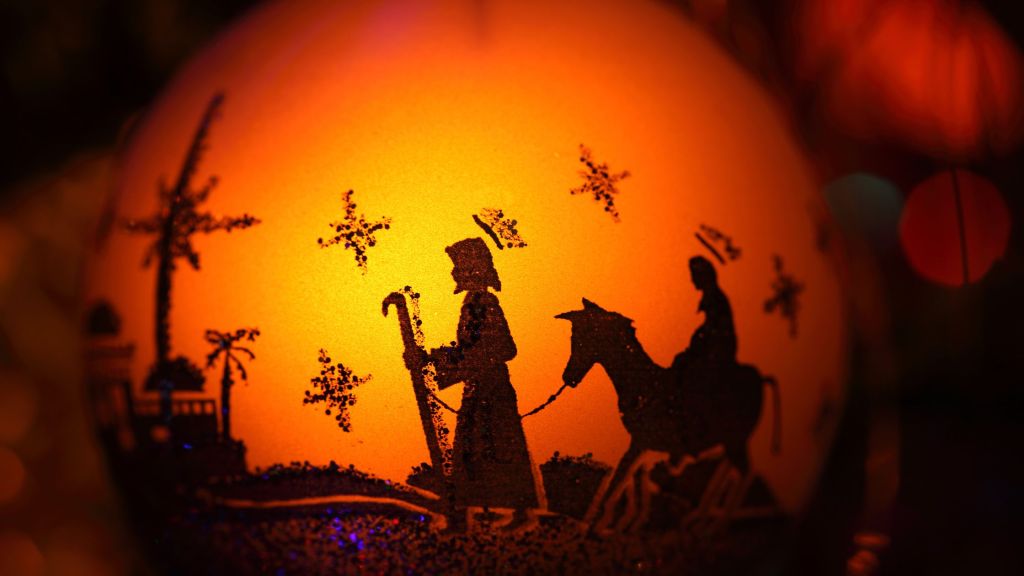
Nativity

The Nativity Story You Were Never Taught

Most of us know the Christmas story from children’s pageants and greeting cards:

Mary and Joseph travel to Bethlehem. There’s no room at the inn. Jesus was born in a stable. Angels appear to shepherds. Wise men bring gifts. Everyone rejoices.

It’s sweet. It’s sanitised. It’s safe.

But the Gospel writers, Matthew and Luke, who give us the nativity narratives, weren’t writing sweet bedtime stories. They were writing resistance literature.

A Scandalous Pregnancy

Mary is an unwed teenager who becomes pregnant. In first-century Palestine, this could have resulted in her being stoned to death. The claim that God caused the pregnancy? That’s not reassurance. That’s making the scandal even bigger.

Joseph has every legal right to abandon her. That he doesn’t makes him complicit in the scandal.

This isn’t a heartwarming beginning. It’s a crisis that threatens both of their lives.

A Political Registration

Why do Mary and Joseph travel to Bethlehem? Because Caesar Augustus, the Roman Emperor who declared himself a god, demanded a census for taxation purposes.

Luke’s Gospel begins by naming the emperor and making clear that this story takes place under Roman occupation. Under imperial violence. Under a system that extracts wealth from the poor to enrich the powerful.

The journey to Bethlehem isn’t a quaint road trip. It’s forced compliance with an oppressive regime.

No Room at the Inn

The traditional interpretation: the inn was full, so they had to settle for a stable.

The radical interpretation: there was no room for them in the structures of power and privilege. The religious establishment, the wealthy class, and the comfortable citizens, none of them made space for a scandal-ridden, poverty-stricken, politically powerless couple.

So the Messiah is born outside the system. In the margins. Among the animals.

Shepherds, Not Senators

Who gets the angelic announcement first? Not King Herod. Not the Sanhedrin. Not the priests in the temple.

Shepherds.

Shepherds were among the lowest classes in Jewish society. They were considered unclean, untrustworthy, and unable to testify in court.

And yet they’re the first to witness the divine breaking into the world.

This is not an accident. This is a statement.

Fleeing State Violence

Shortly after Jesus’s birth, Herod, threatened by prophecies of a new king, orders the massacre of all male children under two in Bethlehem.

Mary, Joseph, and Jesus flee to Egypt.

They become refugees.

The Holy Family spends years in exile, undocumented immigrants in a foreign land, fleeing state-sponsored violence against children.

This is the Christmas story. Not the one on greeting cards, but the one in scripture.

How Commercialism Sanitised the Scandal

Fast forward two thousand years.

The story of an unwed teenage mother, a refugee family, a baby born in poverty, and a government that tries to kill him has been transformed into:

– Hallmark movies about small-town romance
– Shopping mall Santas and luxury gift guides
– Instagram-perfect celebrations that cost thousands
– Prosperity gospel sermons that equate faith with wealth

How did we get here?

The answer is uncomfortable: because the radical Christmas story is bad for capitalism.

A story about God rejecting power, choosing poverty, and standing with refugees doesn’t sell products. It challenges the system that profits from Christmas.

A story about systemic violence, state oppression, and resistance through vulnerability doesn’t fit neatly into consumer culture. It demands we examine our complicity.

So we sanitize it. We sand off the edges. We make it soft, safe, and profitable.

We turn a story about rejecting empire into a celebration of empire’s favourite holiday.

Joseph's letter

What Joseph’s Letter Teaches Us About Institutional Storytelling

In Joseph’s Letter, Michael Battersby searches for historical truth about the resurrection. But what he uncovers isn’t just evidence about a miracle, it’s evidence of how institutions control narratives.

The Vatican, in the novel, isn’t interested in truth. It’s interested in maintaining power. When Michael’s research threatens to disrupt comfortable stories that keep people compliant and donations flowing, the institution’s response is suppression.

Cardinal O’Grady, the antagonist, doesn’t oppose Michael because the evidence is false. He opposes Michael because the truth is dangerous.

Sound familiar?

This is what happens when institutions, religious, political, or commercial, have a vested interest in a particular narrative. They shape the story to serve their interests, not to honor truth.

The Christmas story has been shaped, sanitized, and sold back to us in a form that supports consumer capitalism rather than challenges it.

But the original story? It’s still there. Waiting to be reclaimed.

The Radical Principles the Nativity Actually Teaches

Strip away the commercialism. Ignore the sentimentality. Look at what the Gospel writers actually emphasize.

1. God Sides with the Powerless

The Messiah isn’t born in a palace. He was born in a stable.

He doesn’t appear first to the powerful. He appears first to the shepherds.

He didn’t grow up wealthy and connected. He grows up as a refugee, a carpenter’s son, a member of an occupied people.

Implication: If you want to encounter the divine, look to the margins, not the center. Look to the excluded, not the celebrated.

2. Vulnerability Is Strength, Not Weakness

A baby is the ultimate symbol of vulnerability. Helpless. Dependent. Fragile.

God enters the world not as a conquering king but as an infant who needs his mother.

Implication: Power through domination isn’t divine. Power through love, service, and vulnerability is.

3. Institutions Often Oppose Truth

Herod tries to kill Jesus because the truth threatens his power.

The religious establishment later conspires to crucify him for the same reason.

The systems of power, political and religious, consistently oppose the message Jesus embodies.

Implication: Don’t assume institutions that claim to represent God actually do. Question authority. Demand accountability.

4. Resistance Doesn’t Always Look Heroic

Mary and Joseph don’t lead an armed rebellion. They don’t storm the palace.

They survive. They protect their child. They flee when necessary.

Resistance sometimes looks like simply refusing to let the empire destroy what you love.

Implication: You don’t have to be a revolutionary leader to resist. Sometimes the most radical act is protecting what’s sacred in a world designed to crush it.

Christmas

How to Celebrate a Non-Commercial Christmas

If you’re reading this and thinking, “Okay, but I’m still expected to buy gifts and attend parties and decorate, what am I supposed to do?” here’s the truth:

You don’t have to opt out of Christmas entirely. You have to make conscious choices about what you’re opting into.

Reclaim the Story

Read the actual nativity narratives in Matthew 1:2 and Luke 1:2. Not sanitized children’s versions. The real text.

Notice what’s uncomfortable. Notice what challenges you.

Ask: What would it mean to take this story seriously?

Prioritise Presence Over Presents

The commercialization of Christmas thrives on the belief that love is measured by spending.

But the nativity story offers a different model: presence. Showing up. Being with people even when it’s inconvenient or uncomfortable.

Mary and Joseph didn’t have resources. They had each other.

The shepherds didn’t bring gifts. They brought their presence and their witness.

Support the Margins

If God sided with shepherds, refugees, and the excluded, where should you put your resources?

Instead of buying more things no one needs, consider:
– Donating to refugee assistance organizations
– Supporting community members facing housing insecurity
– Buying gifts from marginalized artisans rather than corporations
– Volunteering time with people experiencing homelessness

Let your Christmas spending reflect the values of the Christmas story.

Question the Performance

Social media has turned Christmas into a performance: who has the best decorations, the most elaborate celebrations, the most picture-perfect family.

But the nativity happened in a stable. With animals. In mess and chaos.

Give yourself permission to have a messy, imperfect, non-Instagrammable Christmas.

The sacred doesn’t require aesthetic perfection.

Resist Empire in Small Ways

You don’t have to dismantle capitalism single-handedly.

But you can make choices that resist the constant pressure to consume:
– Buy fewer, better-quality gifts
– Make things instead of buying them
– Give experiences instead of objects
– Explicitly talk with family about reducing gift-giving expectations

Every choice to prioritize relationship over transaction is a small act of resistance.

Reflection Questions: What Christmas Do You Want?

💭 If Christmas weren’t commercialised, what would you actually want to celebrate?
Strip away the obligations, the expectations, the consumer pressure. What’s left?

💭 How much of your Christmas stress comes from trying to meet external expectations rather than internal values?
Who are you performing for? What would it cost you to stop?

💭 What would it mean to celebrate Christmas as a story about refugees, scandal, and resistance?
How does that change the way you engage with the holiday?

💭 Where in your life do you need to choose vulnerability over performance?
The nativity celebrates weakness as sacred. Where are you pretending to be stronger than you are?

💭 If God sides with the marginalised, who in your community needs your presence this Christmas?
Not your money. Your actual presence.

The Courage to Reclaim What’s Been Stolen

Joseph’s Letter is ultimately about the courage to seek the truth, even when institutions want you to accept comfortable lies.

Michael Battersby risks everything, his safety, his relationships, his life, because he refuses to settle for the sanitized story.

And that’s what reclaiming Christmas requires: the willingness to reject the version that’s been sold to us and dig back to the radical, uncomfortable, transformative original.

It’s not an easy story. It doesn’t fit on a greeting card.

But it’s a story worth recovering.

A story about God rejecting the empire and choosing the excluded.
A story about refugees, scandal, and survival.
A story about love so radical it threatens the powerful.

That’s the Christmas story. And it’s time we started telling it again.

📖 Download the first chapter of Joseph’s Letter and explore what happens when someone refuses to accept the comfortable narrative.

👉 Get Your Free Chapter Here

Join the Conversation About Radical Faith

Reclaiming the Christmas story is easier when you’re not doing it alone.

If this post resonated with you:
Follow us on social media for daily reflections that challenge comfortable narratives

Because the most faithful thing we can do is tell the truth, even when it’s uncomfortable.


About the Author:
Robert Parsons is the author of Joseph’s Letter, a novel exploring institutional power, personal faith, and the courage to question comfortable narratives. After decades of teaching religion in Catholic schools, Robert understands the tension between honoring tradition and confronting its failures. His mission is simple: encourage people to think outside the box about religion, challenge institutions that prioritise power over truth, and reclaim the radical heart of faith from those who’ve sanitized it for profit.

Advent and the Art of Waiting: Why Faith Thrives in Darkness, Not Certainty

Every December, Christians around the world light candles in the dark.

One candle, the first Sunday of Advent. Two to the second. Three the third. Four by the final Sunday before Christmas.

But here’s what most people miss: Advent isn’t about counting down to a celebration. It’s about sitting in the darkness and learning to wait.

In a world that demands instant answers, immediate gratification, and algorithmic certainty about everything from what to watch to what to believe, Advent offers something radically different: permission not to know. Permission to wait. Permission to let faith exist in the tension between hope and uncertainty.

And in 2025, as institutions crumble, as trust erodes, as traditional certainties dissolve, perhaps we need Advent’s wisdom more than we realize.

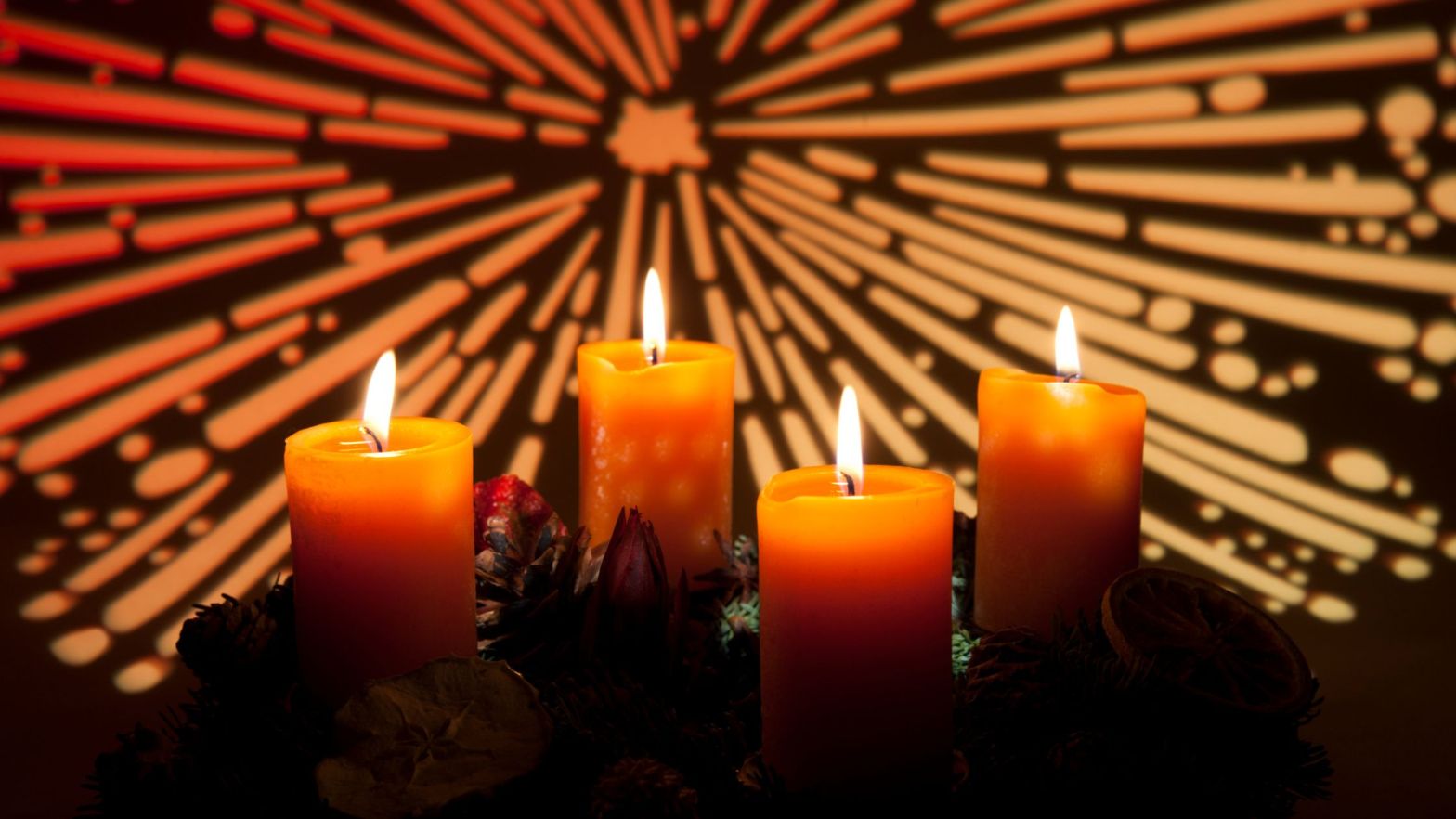
Advent

What Advent Actually Means (And Why We’ve Forgotten)

Advent comes from the Latin adventus, meaning “coming” or “arrival.” For four weeks before Christmas, Christians prepare for the celebration of Christ’s birth while also anticipating his promised return.

But somewhere between medieval liturgy and modern consumer culture, we’ve lost the plot.

Advent has become background noise to Christmas shopping. A countdown to presents and parties. Four weeks of festive buildup to a single commercialized day.

The candles still get lit. The wreaths still get hung. But the practice of spiritual waiting? The acknowledgment that we exist in darkness, longing for light? That’s been sanitized, streamlined, and stripped away.

Here’s what the original practice understood: faith doesn’t require certainty. It requires the willingness to wait in uncertainty.

That’s not a weakness. That’s a strength.

Why Waiting Feels Impossible in 2025

We live in the age of instant everything.

Questions? Google it. Lonely? Swipe right. Bored? Scroll. Uncertain about your beliefs? Here’s an algorithm-curated echo chamber that will confirm exactly what you already think.

We’ve engineered waiting out of existence.

But faith, real, honest, transformative faith, can’t be downloaded, streamed, or delivered in two days with Prime shipping.

In Joseph’s Letter, Michael Battersby spends the entire novel waiting. Waiting for proof that the Shroud of Turin is authentic. Waiting for evidence that Margaret still exists somewhere beyond death. Waiting to know if love survives or if grief is just our refusal to accept that it doesn’t.

He searches the Vatican archives. He follows leads across continents. He risks everything for an answer.

But the waiting, the uncertainty, the darkness, the not knowing, that’s where his faith actually lives.

Not in the destination. In the journey.

Darkness Isn’t the Absence of Faith: It’s Where Faith Begins

Advent starts in the dark for a reason.

The first candle is lit not because we’ve arrived at certainty but because we’re acknowledging we haven’t. We light one small flame and admit: we’re still searching. We’re still waiting. We don’t have all the answers yet.

And that’s okay.

Modern Christianity, especially in Western evangelical traditions, has created a dangerous myth: that strong faith means unwavering certainty. That real believers never doubt. That if you’re questioning, you’re failing.

But history tells a different story.

Saint John of the Cross wrote about the “dark night of the soul”, the spiritual experience of feeling abandoned by God. He didn’t frame it as failure. He framed it as a transformation.

Mother Teresa‘s private letters, published after her death, revealed decades of spiritual darkness. She served millions while feeling spiritually empty. And yet, she continued.

The mystics, the contemplatives, the spiritual giants throughout history, they didn’t avoid darkness. They walked through it. They sat with it. They let it transform them.

Advent is the liturgical recognition of this truth: light is only meaningful because darkness exists. Faith is only powerful because doubt is real.

What Michael Battersby Teaches Us About Spiritual Waiting

Michael Battersby doesn’t start Joseph’s Letter as a man of unwavering faith. He starts as a man undone by grief.

Margaret’s death shatters his world. The comfortable certainties of Catholic tradition, resurrection, eternal life, and reunion in heaven suddenly feel hollow. He wants to believe them. Desperately. But belief without evidence feels like lying to himself.

So he searches.

He pursues Joseph’s Letter, a document that might prove the Shroud of Turin is authentic, which might provide historical evidence of resurrection, which might confirm that Margaret isn’t just gone.

But here’s what the novel understands: the search itself is the spiritual practice.

Michael doesn’t find neat answers. He doesn’t arrive at certainty. What he finds is the courage to keep searching, to keep questioning, to keep hoping even when proof remains elusive.

That’s Advent.

That’s faith in the 21st century.

Not certainty. Not proof. Just the willingness to light one small candle in the dark and wait.

We don’t claim to have all the answers—but we’re asking the questions institutions don’t want asked.

The Four Candles: A Framework for Modern Faith

Traditional Advent wreaths include four candles, each representing a different theme. Let’s reframe them for 2025:

Candle 1: Hope in the Unknown

The first candle is lit when we have the least certainty. Christmas is four weeks away. The darkness is deepest. But we light the candle anyway.

Modern application: Can you have hope without knowing the outcome? Can you trust the process even when you can’t see the destination?

In a world obsessed with predictability, lighting this candle is an act of rebellion.

Candle 2: Peace in the Waiting

The second candle represents peace, not the absence of struggle, but the presence of calm within it.

Modern application: Can you find peace in not having all the answers? Can you sit with uncertainty without spiraling into anxiety?

Michael Battersby searches desperately, but the moments of peace in Joseph’s Letter come when he stops fighting the uncertainty and simply allows himself to exist within it.

Candle 3: Joy in the Journey

The third candle celebrates joy, not happiness dependent on circumstances, but joy rooted in something deeper.

Modern application: Can you find joy in the search itself, even if you never find what you’re looking for?

This is perhaps the hardest lesson. We’ve been taught that joy comes from achieving, acquiring, and arriving. Advent says joy exists in the waiting.

Candle 4: Love That Transcends Understanding

The fourth candle represents love, the love that motivated the incarnation, the love that survives death, the love that makes grief so devastating and so sacred.

Modern application: Can you love someone and still question everything they believed? Can you honor their memory while building your own faith?

Michael’s love for Margaret drives his entire search. He’s not trying to prove her wrong or prove himself right. He’s trying to honor the depth of their connection by refusing to accept easy, comforting lies.

Why Institutions Want You to Skip Advent and Jump to Christmas

Here’s an uncomfortable truth: religious institutions don’t always love the messy, uncertain spirituality that Advent represents.

Certainty is easier to package. Doctrine is easier to control. Unquestioning belief is easier to monetize.

Advent asks believers to sit with darkness, doubt, and waiting. That’s dangerous to institutions that derive power from claiming to have all the answers.

Christmas, with its clear narrative, its celebratory joy, its commercial possibilities, is much safer.

But Advent? Advent is where the real spiritual work happens.

In Joseph’s Letter, the Vatican becomes the antagonist not because the Catholic Church is inherently evil, but because institutions prioritize self-preservation over truth. When Michael’s search threatens to expose uncomfortable realities about the Shroud of Turin, the institution’s response is to suppress, to silence, to protect the narrative.

Because uncertainty is dangerous to power.

But it’s essential to faith.

How to Practice Advent in a World That’s Forgotten How to Wait

If you’re reading this and thinking, “I’m not religious, why does Advent matter to me?” here’s why:

You don’t have to be Christian to benefit from the practice of waiting in darkness.

You don’t have to believe in Christ’s literal return to recognize the value of sitting with uncertainty instead of demanding immediate answers.

You don’t have to light liturgical candles to practice spiritual patience.

Here’s how to engage with Advent’s wisdom, regardless of your beliefs:

1. Identify What You’re Waiting For

What question are you carrying? What uncertainty keeps you up at night? What do you wish you knew but don’t?

Write it down. Name it. Acknowledge that you’re in the dark about it.

2. Resist the Urge to Force an Answer

You don’t have to solve it today. This week. This month.

Practice saying: “I don’t know yet. And that’s okay.”

3. Light One Metaphorical Candle

What’s one small action you can take that honors the search without demanding resolution?

For Michael, it’s following one lead. For you, it might be reading one book. Having one honest conversation. Asking one hard question.

4. Sit With Others in the Darkness

You’re not the only one who doesn’t have it figured out. Find community with other seekers. Other questioners. Other people are brave enough to admit uncertainty.

Joseph’s Letter readers often share that the book gave them permission to voice doubts they’d been carrying for years. That’s the power of shared darkness.

Reflection Questions: Where Are You Waiting?

💭 What certainty have you lost that you wish you could get back?
Sometimes grief isn’t about losing a person. It’s about losing the comfort of not questioning.

💭 What would it mean to stop demanding immediate answers and practice patient seeking instead?
What if the search is the point, not the arrival?

💭 Where in your life are you pretending to have certainty when you actually don’t?
Who would you disappoint if you admitted you’re not sure?

💭 What’s one small candle you can light in your own darkness this week?
Not a solution. Not an answer. Just one small step forward in the uncertainty.

💭 Who taught you that doubt was the enemy of faith?
And what if they were wrong?

The Invitation: Enter the Darkness

Joseph’s Letter doesn’t promise you answers.

It doesn’t resolve every question about faith, doubt, grief, or the afterlife.

What it offers is something rarer and more valuable: a companion in the darkness.

Michael Battersby’s search mirrors the journey many of us take when life forces us to question everything we thought we knew. It’s a thriller, yes. But it’s also a spiritual practice, a meditation on what it means to have faith when certainty is stripped away.

If you’re tired of books that offer easy answers and comfortable certainties, if you’re looking for a story that honors the complexity of belief and the courage of doubt, this is for you.

📖 Download the first chapter free and step into a narrative that treats your questions with the seriousness they deserve.

Join the Conversation About Faith in Darkness

Advent is only four weeks, but the practice of waiting in uncertainty lasts a lifetime.

If this post resonated with you:
Subscribe to our newsletter for monthly reflections on faith, doubt, and spiritual authenticity

Because the journey through darkness is better when we walk it together.


About the Author:
Robert Parsons is the author of Joseph’s Letter, a novel exploring grief, faith, and the search for truth in a world of comfortable lies. After decades of teaching religion to adolescents, Robert understands that the deepest faith often emerges from the darkest doubts. His mission is simple: encourage people to think outside the box about religion, embrace uncertainty as part of spiritual growth, and light candles in the darkness even when they’re not sure what they believe.

Thanksgiving and Grief: Finding Gratitude in Loss (Lessons from Joseph’s Letter)

Thanksgiving asks us to count our blessings. To gather around tables overflowing with food, surrounded by family, and express gratitude for all we have.

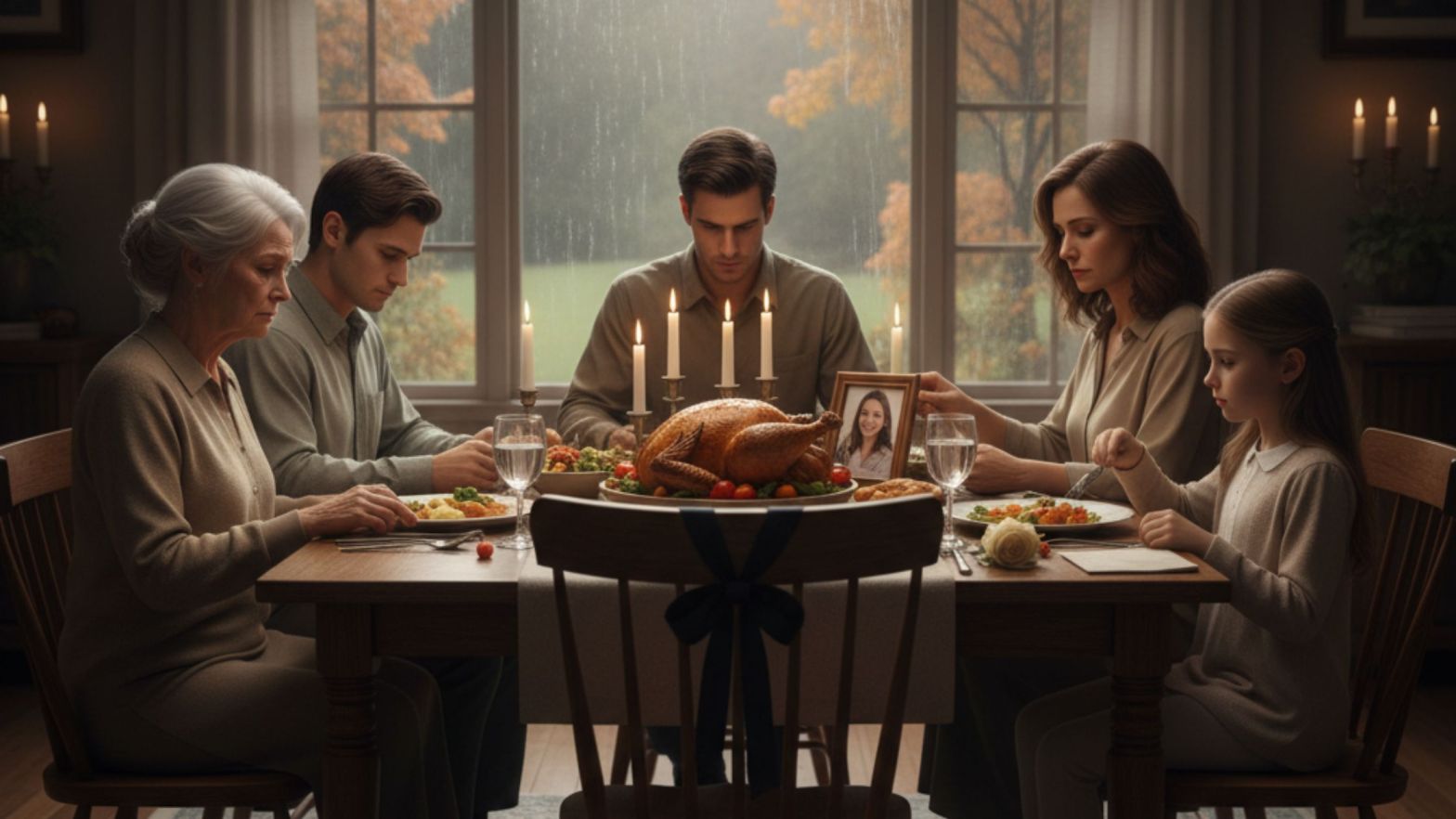
But what do you do when the table has an empty chair?

What do you do when the person you’re most grateful for is the person you’ve lost?

What do you do when grief sits beside you at the feast, uninvited but impossible to ignore?

The cultural script for Thanksgiving doesn’t leave much room for complicated emotions. We’re supposed to be happy. Grateful. Celebratory. But real life is messier than greeting cards suggest. And for many people, Thanksgiving isn’t just about gratitude—it’s about navigating the painful intersection of loss and love, grief and thankfulness, absence and memory.

So let’s talk about the Thanksgiving no one posts on Instagram: the one where gratitude and grief sit at the same table.

The Paradox of Gratitude and Loss

Here’s something most people don’t understand about grief: it doesn’t erase gratitude. In fact, grief often deepens it.

You don’t grieve people who didn’t matter. You don’t feel the ache of absence for relationships that were shallow or insignificant. Grief is the price we pay for love. And in a strange, painful way, the depth of our grief measures the depth of our gratitude.

Think about it:

If you didn’t love them, you wouldn’t miss them.
If they hadn’t shaped you, you wouldn’t feel the absence so acutely.
If their presence hadn’t been a gift, their loss wouldn’t leave such a void.

So when Thanksgiving comes around and everyone’s listing what they’re thankful for, maybe the most honest answer is: “I’m grateful for someone who’s no longer here. And I’m devastated they’re gone. And somehow both things are true at once.”

This is the paradox at the heart of human experience. Love makes us vulnerable. Connection creates the possibility of loss. And gratitude for what we had doesn’t diminish the pain of what we’ve lost—it intensifies it.

Michael Battersby’s Thanksgiving: When Grief Drives the Search for Meaning

In Joseph’s Letter, protagonist Michael Battersby understands this paradox intimately.

His wife Margaret died in a mysterious car accident, leaving him shattered. But here’s what makes Michael’s grief so relatable: he doesn’t just mourn her absence. He’s grateful for every moment they had—and that gratitude makes the loss unbearable.

Michael’s entire quest—his dangerous search for Joseph’s Letter, a document that might prove the resurrection and thus life after death—is driven by this painful intersection of love and loss.

He’s not searching because his faith is weak. He’s searching because his love was strong. Because Margaret mattered so much that he can’t accept that death is the end. Because gratitude for what they had demands hope that they’ll meet again.

His journey asks the question many of us wrestle with: If love is the greatest gift, and death takes it away, what does that mean about the nature of existence?

For Michael, the only acceptable answer is that love must transcend death. That consciousness must survive. That the people we’re most grateful for can’t simply cease to exist.

So he searches. Not to prove God wrong, but to prove love right.

Why Thanksgiving is Hardest After Loss

For anyone who’s lost someone significant, holidays become complicated.

Thanksgiving in particular carries a weight that other holidays don’t. It’s explicitly about gratitude, family, and togetherness. When someone’s missing, their absence echoes through every tradition, every empty chair, every meal that doesn’t taste quite right because the person who always made it isn’t there.

The Pressure to Perform Happiness

There’s social pressure to be grateful, to focus on the positive, to not “bring down” the celebration. So people who are grieving often feel obligated to hide their pain, smile through the meal, and save their tears for later.

But suppressing grief doesn’t make it disappear. It just makes you feel isolated, like you’re the only one at the table carrying something heavy while everyone else seems light.

The Trigger of Traditions

Every Thanksgiving tradition becomes a reminder. The recipe they always made. The seat they always sat in. The joke they always told. The prayer they always led.

Traditions are supposed to provide comfort and continuity. But when someone’s missing, traditions become painful reminders of who’s not there.

The Well-Meaning but Unhelpful Comments

“At least you have other family.”
“They wouldn’t want you to be sad.”
“You need to move on.”
“Everything happens for a reason.”

People mean well. They’re trying to help. But platitudes don’t ease grief—they minimize it. And when someone’s trying to navigate loss during a holiday that demands gratitude, these comments can feel like pressure to pretend everything’s okay when it’s not.

The Myth of "Moving On"

The Myth of “Moving On”

Here’s something our culture gets wrong about grief: we treat it like a problem to solve, a phase to complete, a condition to cure.

We talk about “stages of grief” as if they’re linear steps you climb and then you’re done. We ask people if they’ve “moved on” as if love for the deceased has an expiration date. We expect grief to have a timeline, after which we’re supposed to be “over it.”

But that’s not how grief works.

Grief doesn’t end. It changes.

The acute, overwhelming pain of early loss eventually softens into something more manageable. But the absence remains. The love remains. And on certain days—birthdays, anniversaries, holidays like Thanksgiving—the grief resurfaces with surprising intensity.

This isn’t failure. This isn’t being “stuck.” This is simply what it means to love someone who’s no longer here.

Michael Battersby, months after Margaret’s death, is still consumed by grief. He hasn’t “moved on.” And that’s not a character flaw—it’s a testament to their love.

The question isn’t whether grief ends. It’s whether we can learn to carry it alongside everything else—including gratitude.

Radical Gratitude: Being Thankful for What Hurts

So how do you practice gratitude when the person you’re most grateful for is gone?

By embracing what seems like a contradiction: being grateful for what you had, even though losing it breaks your heart.

This is radical gratitude. Not the shallow “everything happens for a reason” kind, but the deep, painful, beautiful acknowledgment that some things are worth grieving precisely because they were worth having.

Consider these reframings:

Instead of: “I’m devastated they’re gone.”
Try: “I’m grateful I had someone worth missing this much.”

Instead of: “The holidays are ruined without them.”
Try: “The holidays matter because they mattered. Their absence honors their presence.”

Instead of: “I wish I’d never experienced this pain.”
Try: “I’m grateful for the love that made this pain possible.”

This isn’t toxic positivity. It’s not pretending loss doesn’t hurt. It’s acknowledging that grief and gratitude aren’t opposites—they’re companions.

You can be devastated and thankful simultaneously. You can honor someone’s absence while celebrating their impact. You can cry over what you’ve lost while feeling profound gratitude for what you had.

Both can be true.

What Loss Teaches Us About What Matters

There’s a brutal truth about loss: it clarifies priorities with ruthless efficiency.

When someone dies, you suddenly realize how much time you wasted on things that don’t matter. The arguments that seemed important. The grudges you held. The busy work that kept you from being present.

Loss strips away pretense and forces you to confront what’s actually important:

Relationships matter more than achievements.
Presence matters more than productivity.
Love matters more than being right.
Connection matters more than success.

Michael Battersby’s search in Joseph’s Letter is ultimately about this clarity. He’s not pursuing academic glory or proving a point. He’s pursuing the only thing that matters to him now: the possibility of reunion with the person he loves.

Everything else—his career, his reputation, his safety—becomes secondary. Because loss taught him what grief teaches all of us: people are what matter. Everything else is noise.

Thanksgiving Traditions for Those Carrying Grief

If you’re facing Thanksgiving while grieving, here are some ways to honor both your loss and your gratitude:

Create Space for Honest Emotion

Don’t pretend to be fine. Tell people you’re struggling. Give yourself permission to feel sad at a celebration. Grief doesn’t take holidays off, and you shouldn’t have to either.

Honor Their Memory Intentionally

Light a candle. Share a story. Toast them before the meal. Make their favorite dish. Acknowledge the absence explicitly rather than pretending it doesn’t exist.

Rewrite Traditions if Necessary

If old traditions are too painful, create new ones. Move the meal to a different location. Invite different people. Change the menu. You’re allowed to adjust traditions to make them bearable.

Practice Radical Honesty

When someone asks what you’re grateful for, tell the truth: “I’m grateful I had them. And I’m heartbroken they’re gone. And I don’t know how to reconcile those feelings.”

Vulnerability invites connection. And connection is what healing requires.

Let Others Carry Some of the Weight

You don’t have to host. You don’t have to cook. You don’t have to perform strength. Let people help. Let them carry some of the burden. That’s what community is for.

The Question Thanksgiving Forces Us to Ask

At its core, Thanksgiving forces us to confront a fundamental question: What are we actually grateful for?

Is it the stuff we have? The accomplishments we’ve achieved? The comfort we enjoy?

Or is it something deeper—the people who shaped us, the love we’ve experienced, the connections that give life meaning?

Loss clarifies the answer. When someone dies, you don’t think, “I wish I’d worked more hours” or “I should have bought a bigger house.”

You think, “I wish I’d told them I loved them more often. I wish I’d been more present. I wish I’d paid attention to the moments that mattered.”

Margaret Battersby’s death in Joseph’s Letter forces Michael to reckon with exactly this. He realizes, too late, that he took her for granted. That he was too busy with work, too distracted by ambition, too focused on the future to appreciate the present.

And now she’s gone. And all the success in the world means nothing compared to the loss of her presence.

So his search for Joseph’s Letter is really a search for redemption—a way to honor what he failed to appreciate while he had it.

Can Gratitude Coexist with Anger?

Here’s another complication grief brings: sometimes you’re not just sad. Sometimes you’re angry.

Angry at God for allowing it to happen.
Angry at doctors for not saving them.
Angry at the person who died for leaving you.
Angry at yourself for not doing more.
Angry at the world for continuing as if nothing’s changed.

And Thanksgiving, with its emphasis on gratitude, can feel like pressure to suppress that anger. Like you’re supposed to be thankful, not furious. Like anger disqualifies you from the celebration.

But here’s the truth: anger is part of grief. And grief is part of love.

Being angry doesn’t mean you’re not grateful. It means you’re human.

Michael Battersby is angry throughout Joseph’s Letter. Angry at the Church for obstructing his search. Angry at God for taking Margaret. Angry at himself for not appreciating what he had.

But that anger doesn’t diminish his gratitude for the life they shared. It intensifies it.

Because if she hadn’t mattered, he wouldn’t be angry. If their love hadn’t been real, her loss wouldn’t enrage him.

So if you’re angry this Thanksgiving—at loss, at injustice, at the unfairness of mortality—that’s okay. Anger and gratitude can coexist. They’re both expressions of how deeply you’ve loved.

Grateful

Reflection Questions: What Are You Really Grateful For?

As you navigate Thanksgiving, whether you’re grieving or not, consider these questions:

💭 What loss taught you something you couldn’t have learned any other way?

💭 Who are you grateful for, even though they’re no longer here? What did they teach you?

💭 If gratitude doesn’t erase grief, what does it mean to be thankful for something you’ve lost?

💭 What would change if you prioritized relationships over everything else?

💭 If you could go back and change how you spent time with someone you’ve lost, what would you do differently?

The Gift of Grief: What Loss Gives Us

As painful as it is, grief is also a gift.

It’s proof that we loved. Proof that someone mattered. Proof that connection is possible in a world that often feels isolating.

Grief means you didn’t waste your life on shallow relationships or superficial connections. It means you invested deeply, loved fully, and allowed yourself to be vulnerable.

And that vulnerability—that willingness to love knowing loss is inevitable—is the most courageous thing a human can do.

Michael Battersby’s grief in Joseph’s Letter drives the entire narrative. But it also gives his life meaning. His search isn’t about academic achievement—it’s about love. And love, even when it ends in loss, is never wasted.

A Different Kind of Thanksgiving Prayer

If traditional Thanksgiving prayers feel hollow this year, try this instead:

“I’m grateful for the people who shaped me—including the ones who aren’t here.

I’m grateful for the love I’ve experienced, even though it ended.

I’m grateful for the grief that proves love was real.

I’m grateful for the memories that hurt, because they remind me of what mattered.

I’m grateful for the empty chair, because someone worthy once filled it.

I’m grateful for the pain, because it means I’m still capable of feeling deeply.

And I’m grateful for this moment—imperfect, painful, but real.”

Moving Forward: Carrying Both Gratitude and Grief

The truth is, you don’t choose between gratitude and grief. You carry both.

Some days gratitude weighs more. Other days grief does. On holidays like Thanksgiving, both press heavily.

But that weight is bearable—not because grief gets lighter, but because gratitude gives it meaning.

Michael Battersby carries Margaret with him throughout Joseph’s Letter. Her memory drives him. Her love sustains him. Her loss defines him. And in carrying her—both the grief of her absence and the gratitude for her presence—he finds purpose.

Maybe that’s the lesson for all of us this Thanksgiving: we honor the people we’ve lost not by forgetting them or “moving on,” but by carrying them forward. By letting their absence remind us what matters. By allowing grief to deepen our gratitude.

Because the people worth grieving are the people worth being grateful for.

And that gratitude—painful, beautiful, enduring—is what gives life meaning.

Explore Grief, Love, and the Search for Meaning in Joseph’s Letter

If this reflection on grief and gratitude resonated with you, Joseph’s Letter offers an even deeper exploration of love, loss, and what survives death.

Follow Michael Battersby as he searches for proof of life after death—not because he’s lost his faith, but because grief demands answers and love refuses to accept that death is the final word.

It’s a story that asks: What if love is strong enough to transcend death? And what if the search for that answer is the most faithful thing we can do?

Download the first chapter free and step into a narrative that honors both the pain of loss and the power of love.

👉 Get Your Free Chapter Here

Join the Movement for Transparency

We don’t claim to have all the answers—but we’re asking the questions institutions don’t want asked.

If this post challenged you:

Subscribe to our newsletter for bi-weekly explorations of faith, power, and institutional accountability
Share this post with others questioning religious authority
Leave a comment sharing your experience with institutional secrecy
Support transparency by demanding it from the institutions you’re part of

Because the conversation about power and truth doesn’t end here. It’s just beginning.

And change happens when enough people refuse to accept secrecy as normal.

About the Author:
Robert Parsons is the author of Joseph’s Letter, a novel exploring institutional power, personal faith, and the search for truth. After decades teaching in religious schools, Robert understands the tension between loving your faith and questioning your institutions. His mission is simple: encourage people to think outside the box about religion, challenge authority when necessary, and demand transparency from institutions claiming moral leadership.

The Vatican’s Secrets: When Power Protects Itself at the Cost of Truth

Deep beneath Vatican City, behind locked doors and temperature-controlled vaults, lies one of the world’s most mysterious collections: the Vatican Secret Archives.

Technically renamed the “Vatican Apostolic Archives” in 2019, the collection spans over 650 miles of shelving and contains documents dating back more than 1,200 years. Letters from Michelangelo. Henry VIII’s petition for annulment. Records from the trial of Galileo. Correspondence about the Knights Templar.

And that’s just what we know about.

The archives are carefully curated. Access is heavily restricted. Scholars must apply years in advance, specify exactly which documents they want to see, and are forbidden from browsing freely. Most sections remain closed to the public indefinitely. And some documents—particularly those related to modern controversies—are locked away under rules that won’t allow their release for decades.

The question isn’t whether the Vatican has secrets. It’s why.

What is an institution founded on truth so determined to hide?

A History of Institutional Secrecy

The Catholic Church’s complicated relationship with transparency didn’t start recently. For centuries, the Vatican has operated under a simple principle: information is power, and power must be protected.

Consider some historical examples:

The Trial of Galileo Galilei (1633)

When Galileo presented evidence that the Earth revolved around the Sun—rather than the Church’s teaching that Earth was the center of the universe—the Vatican didn’t engage with his scientific findings. Instead, they put him on trial for heresy.

His evidence threatened the Church’s authority. If they were wrong about cosmology, what else might they be wrong about? So rather than acknowledge truth, they suppressed it.

Galileo spent the rest of his life under house arrest. His books were banned. And the Church maintained its geocentric model for another 200 years—not because the evidence supported it, but because admitting error would undermine institutional authority.

The Church didn’t formally apologize for condemning Galileo until 1992. That’s 359 years later.

The Index Librorum Prohibitorum (1559-1966)

For over 400 years, the Catholic Church maintained an official list of banned books—works that Catholics were forbidden to read under pain of excommunication. The list included scientific treatises, philosophical works, and novels that challenged Church doctrine.

Among the banned authors: René Descartes, Voltaire, John Stuart Mill, Victor Hugo, and countless others whose ideas threatened ecclesiastical control.

The message was clear: the Church would decide what truth you were allowed to access. Independent thinking was dangerous. Questions were heresy.

The Index wasn’t abolished until 1966—well into the modern era.

The Handling of Abuse Scandals (1950s-Present)

Perhaps no example better illustrates institutional self-preservation over truth than the Catholic Church’s systematic cover-up of clergy sexual abuse.

For decades, when allegations emerged, the Church’s response wasn’t to protect victims or pursue justice. It was to:

  • Transfer accused priests to new parishes where they could continue abusing
  • Pressure victims into silence through settlements with non-disclosure agreements
  • Use legal teams to fight survivors in court
  • Destroy or hide documentation that would expose the extent of the crisis

This wasn’t a few bad actors. This was institutional policy. From dioceses in Boston to Dublin to Australia, the pattern repeated: protect the institution, sacrifice the vulnerable.

The question haunts every faithful Catholic today: if the Church was willing to protect predators to preserve its reputation, what else has it hidden?

the vatican

Power, Secrecy, and Control: The Vatican Today

Modern defenders of Vatican secrecy argue that privacy is necessary for diplomacy, that historical documents require context, and that not everything needs to be public.

Fair enough.

But there’s a difference between appropriate confidentiality and systematic opacity designed to avoid accountability.

Consider the Vatican Bank scandals, where billions of dollars flowed through accounts linked to money laundering, organized crime, and political corruption. Or the ongoing questions about Vatican finances—why does a religious institution need such complex financial structures if its mission is purely spiritual?

Or consider the documents related to Pope Pius XII and the Holocaust. The Vatican insists these archives are slowly being opened, but critical questions remain unanswered: What did the Pope know? When did he know it? Why didn’t the Church do more to oppose Nazi atrocities?

The longer these documents remain sealed, the more cynical people become about the Church’s motives.

Because secrecy breeds suspicion. And institutions that claim moral authority have a higher burden of transparency, not a lower one.

When Fiction Mirrors Reality: Joseph’s Letter

In Joseph’s Letter, author Robert Parsons explores this exact tension between institutional power and individual truth-seeking.

The protagonist, Michael Battersby, is a grieving professor searching for Joseph’s Letter—a historical document that might contain proof of Jesus’s resurrection. If authentic, the letter would be the most significant archaeological discovery in Christian history.

But the Vatican doesn’t want Michael to find it.

Not because the document is fake. Not because it would disprove Christianity. But because proof changes everything.

Cardinal O’Grady, the novel’s antagonist representing institutional interests, understands that the Church’s power rests on a delicate balance: enough mystery to require faith, enough tradition to claim authority, and enough control to determine what’s true.

If Michael finds Joseph’s Letter and proves the resurrection scientifically, several things happen:

Faith becomes fact. And facts can be debated, analyzed, questioned.

The Church loses its role as gatekeeper. If proof exists outside ecclesiastical control, anyone can access truth without institutional mediation.

New questions emerge. If this is true, what about everything else the Church teaches? What other “mysteries” might have verifiable answers?

So O’Grady does what institutions do when threatened: he obstructs. He manipulates. He uses the Church’s vast resources to prevent truth from emerging—not to protect faith, but to protect power.

The novel asks an uncomfortable question: What if the greatest threat to institutional Christianity isn’t atheism or secularism—but truth itself?

Why Institutions Resist Transparency

Understanding why organizations like the Vatican prioritize secrecy requires understanding how institutions function.

Self-Preservation is the First Law

Every institution—religious, political, corporate—develops a survival instinct. Over time, preserving the institution becomes more important than serving its original mission.

The Catholic Church was founded to spread the teachings of Jesus: love, compassion, justice, humility. But as it accumulated wealth, political power, and global influence, self-preservation took priority.

Admitting mistakes threatens the institution. Transparency reveals vulnerabilities. Accountability limits power.

So secrecy becomes policy.

Control Requires Information Asymmetry

Power depends on knowing more than others. When the Vatican controls access to historical documents, when Church leaders claim special knowledge of divine will, when only certain people can interpret scripture “correctly”—that’s information asymmetry creating power.

The moment everyone has equal access to information, hierarchies flatten. Authority must be earned rather than claimed.

This is why authoritarian regimes ban books, why corporations hide data, and why religious institutions restrict access to their archives. Knowledge distribution threatens power concentration.

Admitting Error Undermines Authority

If the Church admits it was wrong about Galileo, people ask what else it might be wrong about.

If it acknowledges complicity in abuse cover-ups, people question its moral authority.

If it opens all its financial records, people wonder where the money’s really going.

Every admission of wrongdoing creates doubt about everything the institution teaches. So the calculation becomes: better to deny, deflect, and delay than to acknowledge error and lose authority.

But here’s what institutions fail to recognize: covering up error destroys trust far more thoroughly than admitting it ever could.

the cost of secrets

The Cost of Secrets: What We Lose When Institutions Hide Truth

Vatican secrecy doesn’t just affect historians and researchers. It has real consequences for real people.

Abuse Survivors Still Waiting for Justice

Thousands of survivors of clergy sexual abuse have waited decades for the full truth to emerge. They’ve been told the Church is addressing the problem, that reforms are in place, that transparency is improving.

But documents remain sealed. Accused priests are still protected. And survivors still struggle to be believed.

Every day the Vatican delays full transparency is another day survivors are re-traumatized by institutional indifference.

Catholics Questioning Their Faith

Practicing Catholics face an impossible dilemma: how do you remain faithful to an institution that has repeatedly prioritized its own reputation over truth and justice?

Many have left the Church entirely. Others stay but operate with profound skepticism, separating their personal faith from institutional loyalty. And some struggle in silence, feeling caught between belief and betrayal.

The Church’s secrecy forces believers into this painful position. And every revelation of hidden wrongdoing makes it worse.

The Erosion of Religious Authority

Perhaps the greatest cost of institutional secrecy is the erosion of religious moral authority in society.

When the Vatican claims to teach truth but operates in shadows, when it preaches transparency but practices opacity, when it demands accountability from others but resists it for itself—people stop listening.

Not just to the Catholic Church. To all religious institutions.

The credibility crisis facing organized religion today isn’t primarily about theology or modernity or secularism. It’s about trust. And trust requires transparency.

What Would Radical Transparency Look Like?

Imagine if the Vatican committed to genuine transparency:

Open the archives. Not selectively. Not gradually. Fully. Let historians, journalists, and the public access the documents. If the Church has nothing to hide, hiding nothing should be easy.

Publish financial records. Every donation. Every expenditure. Every investment. Religious institutions enjoy tax-exempt status because they supposedly serve the public good—the public deserves to see how resources are used.

Acknowledge historical wrongs without qualification. Not carefully worded non-apologies. Real accountability for the Inquisition, for colonization, for abuse cover-ups, for complicity in injustice.

Admit uncertainty. Stop claiming absolute certainty about things that remain mysterious. Acknowledge that faith involves questions, not just answers.

Welcome scrutiny. Stop treating investigation as attack. Invite oversight. Accept that institutions claiming moral authority should be held to the highest standards of ethical conduct.

Would this weaken the Church? Many Church leaders fear it would.

But consider the alternative: continued secrecy, continued suspicion, continued erosion of trust. At what point does self-protection become self-destruction?

The Difference Between Sacred Mystery and Institutional Secrecy

Here’s an important distinction: there’s a difference between sacred mystery and institutional secrecy.

Sacred mystery acknowledges that some aspects of faith transcend human understanding. The nature of God. The meaning of suffering. The mystery of consciousness and existence. These are profound questions that invite contemplation, wonder, and humility.

Institutional secrecy involves hiding information that’s knowable—financial records, historical documents, evidence of wrongdoing—to protect power and avoid accountability.

The Vatican often conflates the two, treating legitimate questions about institutional behavior as if they’re attacks on sacred mysteries.

But asking “Where did this money go?” isn’t the same as asking “What is the nature of the Trinity?”

One is about accountability. The other is about theology.

And institutions that can’t distinguish between these are institutions that have lost their way.

Reflection Questions: What Do You Believe About Institutional Authority?

As you think about transparency, power, and religious institutions, consider:

💭 Should religious organizations be held to higher standards of transparency than secular institutions—or lower?

💭 Can you trust an institution that repeatedly hides information “for the greater good”?

💭 What would it take for the Catholic Church (or any religious institution) to regain your trust?

💭 Is it possible to separate personal faith from institutional corruption? Should you have to?

💭 If you discovered your religious institution had hidden something significant, would you stay or leave?

Michael Battersby’s Choice: Truth or Comfort

In Joseph’s Letter, Michael faces a choice that mirrors what many believers face today:

Keep searching for truth, even if it disrupts everything you thought you knew—or accept the comfortable narratives you’ve been given and stop asking questions.

The Vatican wants him to choose comfort. To trust the institution. To accept that some things are better left unknown.

But Michael has lost too much to settle for easy answers. His wife is gone. His faith is shattered. And the only thing that might put the pieces back together is truth—real, verifiable, uncomfortable truth.

His journey isn’t about destroying the Church. It’s about demanding better from it. It’s about refusing to accept secrecy when transparency is possible. It’s about believing that faith strong enough to withstand questions is faith worth having.

And maybe that’s the path forward for all of us.

When Does Loyalty Become Complicity?

One of the most painful questions facing faithful Catholics today is this: At what point does loyalty to the institution become complicity in its wrongdoing?

If you know the Church covered up abuse, do you have a moral obligation to demand accountability?

If you benefit from an institution that has harmed others, what’s your responsibility?

If you tithe money that funds legal teams fighting abuse survivors, are you participating in injustice?

These aren’t hypothetical questions. They’re real dilemmas facing millions of Catholics who love their faith but are horrified by institutional behavior.

And the Church’s secrecy makes these questions even harder. Because without transparency, without full disclosure, how do you know what you’re really supporting?

The answer isn’t necessarily to leave. But it is to demand more. To insist on transparency. To support survivors. To push for reform.

Because silence is a choice. And choosing to ignore institutional wrongdoing makes you part of the system perpetuating it.

Hope for Change: Transparency is Possible

Despite centuries of secrecy, change is possible. In fact, it’s already beginning.

Pope Francis has taken some steps toward greater transparency—opening portions of the archives, acknowledging past failures more directly, initiating financial reforms.

It’s not enough. Not nearly enough. But it’s movement.

And that movement accelerates when people demand it. When Catholics refuse to accept secrecy as normal. When donors make transparency a condition of their support. When faithful believers push their institutions to live up to the values they claim to represent.

Change happens when people like Michael Battersby refuse to stop asking questions. When they risk comfort for truth. When they demand that institutions serve people rather than expecting people to serve institutions.

The Vatican’s secrets don’t have to remain secret forever. But they won’t be revealed unless we insist on it.

The Path Forward: Accountability, Not Abandonment

Calling for Vatican transparency isn’t about destroying faith. It’s about strengthening it.

Real faith can withstand scrutiny. Authentic institutions welcome accountability. And religions that claim to serve truth should be the most transparent of all.

The path forward isn’t abandoning religion entirely—it’s demanding that religious institutions live up to their founding principles.

Less secrecy, more honesty.
Less self-preservation, more service.
Less institutional power, more spiritual authenticity.

Because faith without institutional corruption is possible. Belief without cover-ups is achievable. And religions can thrive when they choose truth over self-protection.

But it requires courage. The courage to question. The courage to demand accountability. The courage to keep believing even when institutions fail us.

That’s the kind of faith worth having. That’s the kind of Church worth building.

Explore Institutional Power and Personal Faith in Joseph’s Letter

If this exploration of power, secrecy, and truth resonated with you, Joseph’s Letter offers an even deeper dive into these themes.

Follow Michael Battersby as he battles Vatican obstruction, government interference, and his own doubts in pursuit of a truth that could change everything. It’s a thriller that doesn’t shy away from hard questions about institutional power, religious authority, and the courage it takes to keep searching when everyone wants you to stop.

It’s a story that asks: What if the Church’s greatest fear isn’t doubt—but proof?

Download the first chapter free and step into a narrative that challenges institutional power while honoring authentic faith.

👉 Get Your Free Chapter Here

Join the Movement for Transparency

We don’t claim to have all the answers—but we’re asking the questions institutions don’t want asked.

If this post challenged you:

Subscribe to our newsletter for bi-weekly explorations of faith, power, and institutional accountability
Share this post with others questioning religious authority
Leave a comment sharing your experience with institutional secrecy
Support transparency by demanding it from the institutions you’re part of

Because the conversation about power and truth doesn’t end here. It’s just beginning.

And change happens when enough people refuse to accept secrecy as normal.


About the Author:
Robert Parsons is the author of Joseph’s Letter, a novel exploring institutional power, personal faith, and the search for truth. After decades teaching in religious schools, Robert understands the tension between loving your faith and questioning your institutions. His mission is simple: encourage people to think outside the box about religion, challenge authority when necessary, and demand transparency from institutions claiming moral leadership.

All Saints’ Day: Celebrating the Questioners, Not Just the Believers

Every November 1st, the Catholic Church celebrates All Saints’ Day—a time to honor those who lived exemplary lives of faith. The canonized saints. The martyrs. The unwavering believers who held fast to doctrine even unto death.

But here’s what most All Saints’ Day homilies won’t tell you: many of these saints struggled. They questioned. They doubted. Some even argued with Church authorities, challenged religious dogma, and wrestled with their faith for years before finding peace.

So why do we celebrate saints as if their faith was effortless?

Why do we tell stories of unwavering belief when the truth is far more human, far more relatable, and far more inspiring?

The real heroes of faith aren’t the ones who never questioned—they’re the ones who questioned and kept searching anyway.

The Mythology of Perfect Faith

We’ve created a mythology around faith that’s both beautiful and damaging.

We venerate saints as if they were born with certainty. We tell children about disciples who followed Jesus without hesitation. We praise biblical figures for their “unshakeable” trust in God. And in doing so, we create an impossible standard.

The message becomes: Real faith means never doubting. Real believers never struggle.

But that’s simply not true.

History tells a different story. The saints we celebrate on All Saints’ Day weren’t spiritual robots programmed for perfect obedience. They were complex, flawed, deeply human people who struggled with the same questions we do today:

Is God real?
Why does suffering exist?
How can I believe in something I can’t see or prove?
What if everything I’ve been taught is wrong?

These questions didn’t disqualify them from sainthood. In many cases, these questions made them better Christians, deeper thinkers, and more compassionate leaders.

So why don’t we talk about this?

Saints Who Questioned: The Ones History Remembers

Let’s look at some examples of canonized saints who wrestled with doubt, questioned authority, and challenged the very institutions they served.

Saint Thomas the Apostle: Doubt as a Path to Faith

Everyone knows “Doubting Thomas.” After Jesus’s resurrection, Thomas refused to believe until he could touch the wounds himself. For centuries, he’s been portrayed as the disciple who lacked faith.

But what if we’ve been reading this story wrong?

Thomas didn’t reject Jesus—he just refused to accept secondhand information. He wanted evidence. He wanted truth. And when he got it, his faith became unshakeable. His doubt didn’t weaken his belief—it deepened it.

The Gospel of John records Thomas’s response after seeing Jesus: “My Lord and my God!” That’s not the statement of someone with weak faith. That’s the declaration of someone whose questions led him to profound conviction.

Yet for 2,000 years, we’ve treated doubt as Thomas’s failure rather than his strength.

Saint Teresa of Ávila: Mysticism Born from Struggle

Saint Teresa of Ávila, a 16th-century Spanish mystic and Doctor of the Church, is celebrated for her profound spiritual writings and visions. But what many don’t know is that she spent years in spiritual darkness, feeling abandoned by God and questioning whether her experiences were real or delusional.

She wrote about periods of intense doubt, spiritual dryness, and the fear that everything she believed was an illusion. She questioned Church authorities who dismissed women’s spiritual experiences. She challenged male theologians who tried to silence her.

And through all that questioning, all that doubt, all that struggle—she became one of the most influential spiritual writers in Catholic history.

Her doubt didn’t disqualify her. It qualified her.

Saint Augustine: From Skeptic to Scholar

Before Saint Augustine became one of Christianity’s greatest theologians, he was a skeptic. He questioned everything—philosophy, religion, morality. He explored different belief systems, challenged Christian doctrine, and wrestled with intellectual doubts for years.

His conversion wasn’t a sudden moment of blind faith. It was a gradual process of questioning, reasoning, and eventually finding answers that satisfied both his intellect and his spirit.

His most famous work, Confessions, is essentially a memoir of doubt, struggle, and the messy journey toward belief. It’s honest. It’s raw. And it’s precisely why it still resonates 1,600 years later.

These aren’t outliers. These are some of the Church’s most celebrated figures. And they all questioned.

Michael Battersby

Michael Battersby: A Modern Questioner

In Joseph’s Letter, protagonist Michael Battersby embodies this tradition of faithful questioning.

After his wife Margaret dies in a mysterious accident, Michael becomes obsessed with finding Joseph’s Letter—a historical document that might prove Jesus’s resurrection actually happened. His quest takes him from Boston to Egypt, pitting him against the Vatican, the U.S. government, and his own family.

But here’s what makes Michael’s story so compelling: he’s not searching because his faith is weak. He’s searching because his faith demands answers.

His grief forces him to confront questions he’s avoided his entire life:

Is there really life after death?
Will I see Margaret again?
Does God exist, or have we created Him to cope with mortality?
If faith requires proof, is it still faith?

These aren’t the questions of someone who’s lost his religion. These are the questions of someone whose faith is so important that he can’t accept easy answers anymore.

And that’s exactly what makes him a spiritual descendant of Thomas, Teresa, and Augustine.

Why We Need to Reclaim Doubt as Part of Faith

The problem with modern Christianity—and religion in general—is that we’ve created a false dichotomy: you either have faith or you have doubt. You either believe or you question. You’re either a saint or a skeptic.

But the truth is more nuanced.

Real faith isn’t the absence of doubt—it’s the commitment to keep seeking despite doubt. It’s not about having all the answers—it’s about having the courage to sit with the questions.

When we only celebrate saints who seem to have perfect, untroubled faith, we do a disservice to everyone struggling with genuine spiritual questions. We make them feel like their doubts are failures. Like they’re not “good enough” Christians. Like questioning means they don’t belong.

But what if we reframed the conversation?

What if we told young people: “Your questions don’t disqualify you. They’re proof you’re taking this seriously.”

What if we told doubters: “The saints you admire struggled too. You’re in good company.”

What if we celebrated All Saints’ Day by honoring not just those who believed, but those who questioned, struggled, and searched—and through all of that, found something worth holding onto?

The Danger of Faith Without Questions

Here’s an uncomfortable truth: faith without questions can become dangerous.

When people are taught never to question religious authority, they become vulnerable to manipulation. When doubt is treated as sin, people suppress genuine concerns about hypocrisy, abuse, and corruption within religious institutions.

History is full of examples:

The Crusades: Unquestioning soldiers slaughtered thousands in the name of God.

The Inquisition: People were tortured and killed for questioning Catholic doctrine.

Modern abuse scandals: Victims stayed silent because they were taught not to question Church leaders.

In Joseph’s Letter, Cardinal O’Grady represents this institutional mindset. He doesn’t want Michael to find Joseph’s Letternot because it would disprove Christianity, but because it would shift power. Proof would give people certainty—but it would also embolden them to question everything else the Church has told them.

And that’s dangerous to any institution built on unquestioning obedience.

The healthiest faith communities aren’t the ones that suppress questions—they’re the ones that encourage them. They’re the ones where doubt is seen as part of the journey, not an obstacle to it.

Because when people are free to question, they’re also free to choose belief authentically rather than accepting it passively.

What All Saints’ Day Should Really Celebrate

If we’re going to honor the saints, let’s honor them honestly.

Let’s celebrate:

The questioners who refused to accept easy answers
The doubters who searched until they found something real
The challengers who pushed back against corrupt institutions
The seekers who valued truth over comfort
The strugglers who kept going even when faith felt impossible

Because those are the people who changed Christianity. Those are the ones whose legacy endures. And those are the ones who give hope to everyone who’s ever felt like their doubts disqualify them.

All Saints’ Day shouldn’t be about perfection. It should be about authenticity.

It shouldn’t celebrate people who never struggled. It should celebrate people who struggled and persevered.

It shouldn’t honor blind obedience. It should honor courageous questioning.

The Paradox of Faith: Certainty vs. Mystery

Here’s the tension at the heart of Michael Battersby’s quest in Joseph’s Letter:

If he finds proof of the resurrection, does faith become unnecessary? If we have evidence, do we still need belief?

It’s the same paradox that’s haunted Christianity for 2,000 years.

Jesus told Thomas, “Blessed are those who have not seen and yet have believed.” But he also showed Thomas his wounds. He provided evidence. He understood that some people need more than words—they need something tangible.

And there’s no shame in that.

Faith and evidence aren’t enemies. They’re partners. Evidence can lead us to faith. Faith can inspire us to seek evidence. And the tension between the two—the space where certainty and mystery coexist—is where real spiritual growth happens.

Michael’s search isn’t about destroying faith—it’s about finding what’s real beneath centuries of dogma, tradition, and institutional control.

And maybe that’s what we all need: the courage to dig beneath the surface, to question what we’ve been told, and to find what’s authentically true for us.

Reflection Questions: What’s Your Relationship with Doubt?

As you think about faith, doubt, and what All Saints’ Day means to you, consider these questions:

💭 Have you ever felt like your doubts disqualified you from faith? Who told you that—and were they right?

💭 Who in your life has inspired your faith journey—not by having all the answers, but by asking the right questions?

💭 If you could ask one question and receive an honest answer about God, faith, or the afterlife, what would it be?

💭 Do you think doubt strengthens faith or weakens it? Can the two coexist?

💭 What belief have you questioned recently—and what did that process teach you?

The Saints We Need Today

The world doesn’t need more perfect believers. We have enough people claiming certainty they don’t actually possess.

What we need are authentic seekers. People willing to admit they don’t have all the answers. People who question, struggle, doubt, and search—and through all of that, find something worth believing in.

We need saints who look less like marble statues and more like real human beings.

We need spiritual role models who show us it’s okay to wrestle with faith, to argue with God, to demand better from religious institutions, and to keep seeking even when the path is unclear.

Because that’s what the real saints did.

That’s what Thomas did when he demanded to see the wounds.

That’s what Teresa did when she challenged theological authorities.

That’s what Augustine did when he spent years questioning before believing.

And that’s what Michael Battersby does in Joseph’s Letter when he risks everything to find the truth.

All Saints’ Day: A Call to Courageous Faith

This All Saints’ Day, let’s expand our definition of sainthood.

Let’s honor not just the martyrs who died for their faith, but the doubters who lived with their questions.

Let’s celebrate not just the obedient, but the challengers who pushed institutions to be better.

Let’s remember not just those who claimed certainty, but those who admitted uncertainty and kept searching anyway.

Because that kind of faith—the kind that embraces questions, welcomes doubt, and pursues truth relentlessly—is the faith that changes the world.

It’s the faith that challenges corruption.
It’s the faith that demands justice.
It’s the faith that sees through hypocrisy.
It’s the faith that refuses to accept easy answers when complex truth is available.

And it’s the faith that will guide us through whatever uncertain times lie ahead.

Explore Faith and Doubt in Joseph’s Letter

If you found this reflection meaningful, you’ll discover even deeper explorations of faith, doubt, and the courage to question in Joseph’s Letter.

Follow Michael Battersby as he searches for historical proof of the resurrection—not because he wants to destroy faith, but because grief demands answers and authentic belief requires truth.

It’s a thriller that makes you think. A mystery that honors both faith and doubt. And a story that asks: What if the most faithful thing you can do is refuse to stop questioning?

Download the first chapter free and step into a narrative that celebrates the questioners, not just the believers.

👉 Get Your Free Chapter Here

Join the Conversation About Faith and Doubt

We don’t claim to have all the answers—but we’re committed to asking the questions that matter.

If this post resonated with you:

Subscribe to our newsletter for bi-weekly deep dives into faith, doubt, and spiritual authenticity
Share this post with someone navigating their own questions
Leave a comment sharing your own experience with doubt and faith
Follow us on social media for daily reflections and journal prompts

Because All Saints’ Day isn’t the end of the conversation—it’s the beginning.


About the Author:
Robert Parsons is the author of Joseph’s Letter, a novel that explores the intersection of faith, doubt, and the search for truth. After decades of teaching religion to adolescents, Robert understands the questions that keep believers up at night—and he’s not afraid to explore them honestly. His mission is simple: encourage people to think outside the box about religion, belief, and what it means to have authentic faith.

Faith in Uncertain Times: What Rome’s Strikes Teach Us About Trust in Leadership and Religious Institutions

When the trains stop running in Rome, it’s more than just an inconvenience. It’s a statement.

Throughout 2025, Italy has been gripped by waves of strikes that have brought public transport, healthcare, and education to a standstill. Workers are demanding fair wages, better conditions, and most importantly—respect. The strikes aren’t just about money. They’re about dignity, voice, and the realization that the systems they once trusted are no longer working in their favor.

But here’s the uncomfortable truth: the same questions driving workers into the streets apply far beyond politics. They echo through the halls of religious institutions, into our personal beliefs, and straight into the heart of what it means to have faith in uncertain times.

When the people we’re told to trust fail us—whether they’re politicians, employers, or religious leaders—what do we do? Do we keep the faith? Or do we walk away?

Why Rome’s Strikes Matter Beyond Politics

Rome is a city built on two pillars: political power and religious authority. The Vatican sits at its heart, a symbol of faith for over a billion Catholics worldwide. But just blocks away, everyday Romans are fighting for survival.

The irony is impossible to ignore.

While the Catholic Church controls billions in assets and wields immense global influence, Italian workers struggle to make ends meet. Public services crumble. Salaries stagnate. And the institutions that are supposed to serve the people—government, healthcare, education—fail to deliver.

Sound familiar?

Throughout history, we’ve seen this pattern repeat: institutions grow powerful, they become self-serving, and eventually, the people demand change. The Protestant Reformation. The fall of monarchies. The civil rights movement. And now, in 2025, the strikes across Italy.

But this isn’t just about labor disputes or political corruption. It’s about something deeper—trust. When the institutions we depend on stop serving us, when they prioritize self-preservation over people, we’re forced to ask: What else have we been trusting blindly?

The Crisis of Trust: From Government to God

In Joseph’s Letter, protagonist Michael Battersby grapples with this exact question. After losing his wife in a mysterious accident, he embarks on a dangerous quest to find historical proof of Jesus’s resurrection. But his journey isn’t driven by unwavering faith—it’s fueled by grief, doubt, and a desperate need for answers.

The Vatican, however, doesn’t want him to succeed.

Cardinal O’Grady, representing the Church’s institutional interests, actively works against Michael. Not because Michael’s search is heretical, but because truth is dangerous when you’ve built power on mystery. The Church thrives on faith without evidence. Proof would shift the balance. It would give people certainty—but it would also give them questions.

This mirrors what’s happening in Rome today. The strikes aren’t just about wages. They’re about people realizing that the systems they’ve trusted—government, employers, institutions—aren’t working for them. They’re working for themselves.

And when that realization hits, everything is up for reconsideration.

Including faith.

When Institutions Prioritize Power Over People

When Institutions Prioritize Power Over People

Let’s be honest: religious institutions aren’t immune to corruption.

The Catholic Church has a long history of prioritizing institutional power over individual well-being. The Crusades. The Inquisition. The systematic cover-up of abuse scandals. These aren’t ancient relics—some of these injustices are still being reckoned with today.

And while many Catholics maintain deep, personal faith, there’s growing skepticism about the institution itself. Can you trust an organization that has repeatedly chosen secrecy over transparency? That has protected abusers rather than victims? That holds billions in wealth while its followers struggle?

The same questions apply to governments. To corporations. To any institution that accumulates power.

When Italian workers strike, they’re saying: We trusted you to serve us. You didn’t. So we’re taking our power back.

When someone leaves the Church, they’re saying the same thing: I trusted you to guide me. You failed. So I’m finding my own way.

This isn’t about losing faith. It’s about redirecting it—away from institutions and back toward something more personal, more authentic.

The Intersection of Faith and Politics in Italy

Italy’s relationship with religion and politics has always been complicated.

For centuries, the Catholic Church held direct political power through the Papal States, controlling not just spiritual matters but land, law, and governance. Even after Italian unification in the 19th century, the Vatican retained significant influence over Italian politics and society.

Today, that influence persists in complex ways. Catholic values still shape Italian law, particularly around issues like abortion, marriage, and education. But younger Italians are increasingly secular, questioning traditions their grandparents accepted without hesitation.

The strikes of 2025 reflect this shift. They’re not explicitly anti-religious, but they are anti-authority. They represent a generation tired of being told what to accept, what to believe, and what to endure.

And that generational tension—between tradition and change, obedience and autonomy—is at the core of spiritual questioning today.

What Joseph’s Letter Teaches Us About Institutional Faith

Michael Battersby’s quest in Joseph’s Letter isn’t just about finding historical artifacts. It’s about wrestling with the same questions facing people today: Can we trust institutions to tell us the truth? And if not, where do we find it?

Throughout the novel, Michael encounters resistance from the Vatican at every turn. They have access to resources he needs. They control information he’s seeking. And they use that power to keep him from uncovering what might be the most important discovery in Christian history.

Why?

Because institutions—religious or otherwise—have a vested interest in maintaining the status quo. Change is destabilizing. Truth is unpredictable. And people who start questioning one thing often start questioning everything.

This is exactly what’s happening in Italy. Workers aren’t just striking for better pay. They’re questioning the entire system that told them to work hard, trust the process, and things would get better. They were lied to. And now they’re demanding accountability.

The same applies to faith. When you start questioning whether the Church is trustworthy, you start questioning everything it taught you. Not because you’ve lost your spirituality, but because you’re reclaiming it.

Can Faith Survive Without Institutions?

Here’s the paradox: many people who leave organized religion don’t lose their faith. They redirect it.

They stop trusting the institution but continue seeking spiritual meaning. They question doctrine but still pray. They reject the Church’s authority but embrace the teachings of Jesus, Buddha, or other spiritual figures on their own terms.

This is what makes institutional leaders nervous. Because if people realize they don’t need the institution to have faith, the institution loses its power.

And that’s why Michael’s search in Joseph’s Letter is so dangerous to the Vatican. Not because he might disprove the resurrection—but because he might prove it. And if proof exists outside the Church’s control, the Church loses its role as gatekeeper.

The same applies to any institution. When workers realize they can organize without permission, they strike. When believers realize they can seek truth without intermediaries, they question.

And in both cases, power shifts.

What Can We Learn from Rome’s Strikes?

The strikes in Italy offer lessons that extend far beyond labor rights. They’re a reminder that:

1. Trust must be earned, not demanded.
Institutions—political, religious, or otherwise—can’t expect blind loyalty. If they want people’s trust, they need to serve people’s interests.

2. Silence is complicity.
The Italian workers striking in 2025 aren’t just fighting for themselves. They’re refusing to accept broken systems on behalf of future generations. Sometimes, the most faithful thing you can do is speak up.

3. Questioning isn’t betrayal.
When Michael Battersby questions the Church in Joseph’s Letter, he’s not abandoning his faith—he’s deepening it. Real faith can withstand questions. Real leadership can handle scrutiny.

4. Institutions change when people demand it.
The Catholic Church has reformed before—slowly, reluctantly, but it has changed. The same is true for governments, schools, workplaces. But change doesn’t happen unless people push for it.

5. Faith and doubt can coexist.
You don’t have to choose between belief and skepticism. In fact, the most authentic faith often emerges from the tension between the two.

The Questions We’re All Asking

Whether you’re watching Italian workers strike, reading about Church scandals, or navigating your own spiritual journey, the questions are the same:

Who can I trust?
What do I believe, and why do I believe it?
Am I following my own convictions, or just repeating what I was taught?
If the institutions I trusted have failed, where do I go from here?

These aren’t easy questions. But they’re necessary ones.

In Joseph’s Letter, Michael Battersby doesn’t find easy answers. His search is messy, dangerous, and filled with setbacks. But he keeps going because the alternative—blindly accepting what he’s told—is worse than the uncertainty of seeking truth.

The same applies to our lives today. We can accept systems that don’t serve us, or we can question them. We can follow institutions that prioritize power over people, or we can seek our own understanding.

The choice is ours.

Reflection Questions: Where Do You Stand?

As you think about trust, institutions, and faith in your own life, consider these questions:

💭 What institution—religious, political, or otherwise—have you trusted without questioning? Is that trust still deserved?

💭 When was the last time you spoke up against something unjust? What held you back—or pushed you forward?

💭 If you’ve left a religious institution, did you lose your faith, or redirect it?

💭 What would it take for you to trust an institution again? Transparency? Accountability? Something else?

💭 Are there beliefs you hold simply because they were taught to you, or have you examined them for yourself?

Joseph's letter

Final Thoughts: Faith Beyond Institutions

The strikes in Rome remind us that people are waking up. They’re questioning systems they once accepted. They’re demanding better. And they’re refusing to stay silent.

The same shift is happening spiritually. People are leaving churches in record numbers—not because they’ve lost their spirituality, but because they’re seeking it in more authentic ways. They’re reading, questioning, and finding their own path.

This isn’t a crisis of faith. It’s an evolution of it.

And that evolution requires courage—the courage to question what we’ve been told, the courage to seek truth even when it’s uncomfortable, and the courage to trust ourselves when institutions have failed us.

Michael Battersby’s journey in Joseph’s Letter captures this struggle perfectly. He’s not trying to destroy faith—he’s trying to find what’s real beneath centuries of dogma and institutional control.

Maybe that’s what we all need to do.

Explore These Themes Further in Joseph’s Letter

If this post resonated with you, you’ll find even deeper explorations of faith, doubt, and institutional power in Joseph’s Letter. The novel follows a grieving professor’s dangerous quest to uncover historical proof of the resurrection—and the Church’s desperate attempts to stop him.

It’s a thriller that makes you think. A mystery that challenges your beliefs. And a story that asks: What if faith requires doubt?

Download the first chapter free and step into a narrative that will stay with you long after the last page.

👉 Get Your Free Chapter Here

Join the Conversation

We don’t have all the answers—but we’re asking the questions that matter. If you found this post thought-provoking, consider:

Subscribing to our newsletter for bi-weekly deep dives into faith, politics, and the big questions
Sharing this post with someone navigating their own spiritual journey
Leaving a comment with your thoughts on trust, institutions, and faith in 2025

Because the conversation doesn’t end here. It’s just beginning.


About the Author:
Robert Parsons is the author of Joseph’s Letter, a novel exploring faith, doubt, and the search for truth. After spending decades teaching religion to adolescents, Robert knows firsthand the questions that keep people up at night—and he’s not afraid to explore them. His mission is simple: encourage people to think outside the box about religion, belief, and what it means to live forever.

Serpents Through Time: What Snakes in Myth and Joseph’s Letter Reveal About Fear, Wisdom, and Transformation

When Joseph, the narrator of Joseph’s Letter by Robert Parsons, finds snakes slithering into his hotel room in Africa, he doesn’t just stumble upon an inconvenience. He steps into one of the oldest symbolic dramas in human history.

“That night in Africa, I returned to my room and found snakes coiled on the floor, as if the walls themselves had breathed them in. They weren’t aggressive, but their presence was enough to keep me awake—reminding me that even in concrete walls, the wilderness finds a way in.” (Joseph’s Letter, p.196)

That unsettling image opens the door to a much larger conversation: why do snakes show up everywhere in human stories—from Eden’s serpent to Hindu Nāgas, from Medusa’s gaze to modern psychology? And what do Joseph’s encounters tell us about our own timeless relationship with these creatures?

This blog unpacks the long history of snakes in religion, mythology, psychology, and literature, and draws parallels with Parsons’ work. Whether feared, revered, or both, serpents have always carried meanings far bigger than their bodies.

Snakes in Ancient Mythology

Snakes in Ancient Mythology: Guardians and Monsters

Human fascination with snakes is older than writing itself. In Mesopotamia, one of the earliest serpent deities was Ningishzida, often depicted as a serpent with a human head, guardian of the underworld and a symbol of fertility. The fact that snakes shed their skin made them potent emblems of renewal and immortality.

In ancient Egypt, serpents carried double weight. The cobra, worn on the crown of Pharaohs as the uraeus, symbolized divine authority and protection. Yet at the same time, the monstrous serpent Apophis embodied chaos, battling Ra in the nightly journey through the underworld.

This dual nature—protector and destroyer—already sets up the ambivalence we still see today. Joseph himself wrestles with that duality.

“The snake wasn’t only a threat—it was an interruption. A reminder. I couldn’t decide if it was enemy or messenger.” (Joseph’s Letter, p.124)

In Greek mythology, snakes again split between extremes. The Rod of Asclepius, entwined by a serpent, remains the symbol of healing to this day. Yet the Gorgons, especially Medusa, embodied terror, transformation, and death. To look at her was to be petrified—paralyzed by one’s own fear.

Parsons’ use of snakes echoes these ancient stories. When snakes appear in Joseph’s life, they aren’t simple creatures. They’re myth in motion.

Serpents in Religion: Temptation, Wisdom, and Power

Few creatures have been more morally charged than the serpent of Genesis, whispering temptation to Eve. In the Christian tradition, the snake became shorthand for sin, deception, and the fall of humanity. Yet even here, the serpent is a paradox: it offers not just temptation but knowledge.

Contrast this with Hinduism, where snakes (Nāgas) often serve as protectors of treasure and water, both feared and revered. The god Vishnu rests on the cosmic serpent Shesha, and Krishna is depicted dancing triumphantly on the heads of serpents.

In Buddhism, the serpent Mucalinda rises from the earth to shield the meditating Buddha from a storm—portraying the snake not as enemy but as guardian of enlightenment.

Joseph notices this duality instinctively:

“I wondered then if the snake was there to frighten me, or to teach me something. My instinct was fear. My reason whispered otherwise.” (Joseph’s Letter, p.95)

This struggle—between instinctive fear and deeper meaning—is exactly what religions worldwide have wrestled with for millennia.

Snakes as Symbols of Transformation

If one symbolic thread runs through nearly every culture, it’s this: snakes signify transformation. Their ability to shed skin makes them living metaphors for renewal, rebirth, and the cycles of life.

Carl Jung argued that snakes represent the shadow, the primitive, instinctual part of ourselves that we try to suppress but must confront in order to grow. The snake is both fear and the path beyond fear.

Joseph’s own African encounter captures this:

“I couldn’t kill them. I couldn’t even touch them. Instead, I lay awake, listening, as if they were keeping vigil over my own unease.” (Joseph’s Letter, p.196)

Here, the snakes function like Jungian archetypes: not enemies, but manifestations of Joseph’s inner turmoil. They shed their skin, and he is asked—will he?

Snakes in Psychology and Evolutionary Fear

Science gives another layer of insight. Psychologists have long noted that humans are hardwired to notice snakes faster than almost any other creature. Known as the “Snake Detection Theory,” this suggests an evolutionary advantage in recognizing potential danger.

But this quick recognition also gives snakes symbolic power. They become stand-ins for whatever unsettles us most deeply: mortality, betrayal, change.

Joseph’s sleepless night in the hotel becomes less about reptiles and more about the psyche itself: his inability to “kill” or even confront them reflects how humans struggle with what we cannot fully control.

Joseph's letter

Joseph’s Letter as Modern Mythmaking

So why does Robert Parsons use snakes so prominently in Joseph’s Letter?

Because snakes are not just background detail. They’re myth made flesh. Each encounter is a way of pulling Joseph—and us—into the universal symbolic field.

  • The hotel snakes in Africa (p.196) show us fear entering even safe walls.
  • The reflective quote on snakes as interruptions (p.124) positions them as thresholds to meaning.
  • The question of whether snakes are teachers or threats (p.95) ties Joseph’s story to the tension between Genesis’ serpent and the Nāga who shelters the Buddha.

In this way, Joseph’s Letter becomes more than memoir. It joins the long arc of myth where serpents are never just animals—they are reminders of mystery.

The Many Faces of the Serpent

Let’s summarize the symbolic roles snakes take on across cultures:

  • Fear/Chaos: Genesis’ serpent, Apophis, Medusa.
  • Wisdom/Knowledge: Eve’s awakening, Nāgas, Kundalini in yogic practice.
  • Healing: Asclepius’s staff, serpent medicine in shamanic traditions.
  • Transformation: Shedding skin as rebirth, Jungian archetypes.
  • Guardianship: Mucalinda shielding the Buddha, uraeus on Pharaoh’s crown.

Joseph’s encounters map directly onto this. His snakes are chaos intruding, wisdom whispering, transformation demanding attention. They force him to see that fear and wisdom are often entwined.

Conclusion: Lessons from the Snake

At the end of his African encounter, Joseph admits he cannot fully explain the snakes. They’re both too ordinary and too mysterious.

“In the morning they were gone. As if the night itself had taken them back. But they left me changed, unsettled, watching corners I never noticed before.” (Joseph’s Letter, p.197)

That’s the truth of snakes across myth, religion, psychology, and literature: they remind us that control is an illusion, that transformation is always waiting, and that wisdom often hides in fear.

The serpent is not just in Joseph’s hotel room. It’s in Eden. It’s in ancient temples. It’s in our dreams. And whether we run from it or learn from it, it always asks the same question: what are you ready to shed?

Enjoyed this blog? 

DOWNLOAD THE FIRST CHAPTER FREE TODAY

The Universe Inside a Human Brain

 A Cosmos of Flesh and Fire

“Look at one human brain—every science is a universe. You might not be able to see it all, but you can see everything that’s there.”

The brain weighs about 1.3 kilograms. Soft tissue. Fat, blood, and firing cells. And yet within it exists everything: memory, identity, grief, mathematics, poetry, politics, love. It is both fragile and infinite. To look at a brain is to look at something that contains all of us, and perhaps more than we can ever measure.

Modern science keeps mapping it—neuroscience, psychiatry, artificial intelligence—yet the closer we get, the more mysterious it feels. The paradox is simple: the brain is both the thing we study and the thing doing the studying. We hold the telescope and the stars all at once.

The Brain as Universe

On average, the human brain has 86 billion neurons, each capable of making up to 10,000 connections. That’s nearly a quadrillion synapses—numbers that echo the stars. Astrophysicists comparing 3D maps of galaxies with simulations of brain networks found striking structural similarities.

Neurons and galaxies cluster along filaments, nodes, and voids, following physical laws of efficiency and energy distribution.

The result? A literal image of the brain as cosmos. The Milky Way might be mirrored in your mind.

But unlike the cosmos, the brain isn’t an external expanse. It’s internal, folded in silence beneath the skull. If telescopes let us map billions of light-years, brain scans let us trace milliseconds of firing neurons. Both remind us of scale—immensity hidden in something so small.

Philosophers from Aristotle to William James imagined the mind as containing worlds. Neuroscience today confirms what poets guessed: the brain is not a simple organ but a multiverse of processes, spanning every scientific discipline we know.

Every Science in One Organ

Think of the sciences. All of them live inside the brain.

  • Physics. Electrical impulses run along axons; magnetic resonance reveals fields of energy. Some physicists speculate quantum mechanics may play a role in consciousness itself—a controversial but enduring hypothesis.
  • Chemistry. Neurotransmitters like serotonin, dopamine, and GABA regulate everything from joy to despair. Each chemical reaction, each synapse, is a laboratory experiment happening billions of times a second.
  • Biology. The brain carries evolutionary history. The reptilian brain governs survival reflexes, the limbic system emotions, the neocortex reasoning and imagination. We are evolution stacked in layers.
  • Psychology. Here live memory, trauma, habit, creativity. Behavioral patterns rise not just from environment but from neuronal scripts written deep in development.
  • Computer Science. Neural networks in artificial intelligence borrow their architecture from us. Machine learning is a pale echo of the algorithms of synaptic plasticity. Studying brains has built our machines; now machines are helping us study brains.
  • Philosophy & Theology. Consciousness, free will, the mind-body problem, the soul. These questions don’t leave the lab; they expand it. The so-called “hard problem of consciousness”—why physical processes create subjective experience—remains unsolved.

To look at a single brain is to stand in a library of sciences, each aisle crowded with experiments, equations, and existential questions.

The Limits of Knowing

Here’s the paradox: we can see almost everything in the brain, but we can’t see what matters most.

Functional MRIs map blood flow. Connectomics traces wiring diagrams. Neural implants decode patterns to move prosthetic limbs. But consciousness—the inner voice, the feel of red, the memory of your mother’s laugh—remains opaque.

“You cannot see it all, but you can see everything that’s there.” The biology is complete, the wiring tangible. Yet the experience is absent. Science can chart the architecture but not the tenant.

This is the enduring tension: the brain is object and subject. We dissect it as if it were stone, forgetting it is also the stonecutter. We study its maps while it is the cartographer.

No other science faces this mirror. Physics does not contain itself. Chemistry doesn’t weep while mixing. But neuroscience must confront its own recursion: the brain studying the brain.

Echoes in Literature & Faith

Echoes in Literature & Faith

Writers and mystics intuited long before imaging machines. Dostoevsky’s characters wrestled with the ungovernable storms of thought. Toni Morrison wrote of memory as a haunting cosmos. Poets from Blake to Borges imagined infinity folded into human perception.

Faith traditions echo this intuition: the “inner world” as infinite, the soul as cosmos. The Kabbalists taught of worlds mirrored within the human form. Buddhist philosophy compares the mind to a boundless sky. Christian mystics speak of the “kingdom within.”

Robert Parsons’ own Joseph’s Letter circles this theme. Michael Battersby’s grief is not just an emotion—it is a cosmos. The loss of his wife collapses his inner universe, sending him searching not just for proof of the divine, but for a coherence big enough to hold his sorrow.

When we speak of brains as universes, we’re not merely being metaphorical. We’re acknowledging that each consciousness is vast enough to mirror creation itself.

Why This Matters Now

In 2025, this isn’t just philosophy. It’s politics, ethics, technology.

  • Artificial Intelligence. Neural networks—modeled on us—now generate language, art, and strategies. But they don’t “feel.” That gap matters. A machine may simulate consciousness, but the qualia—the inner texture of thought—remains unreachable.
  • Neurotechnology. Brain-computer interfaces promise treatment for paralysis and memory loss, but they also raise questions: what happens when minds are hacked? Who owns your thoughts when they can be translated into data?
  • Mental Health. Depression, anxiety, trauma—each is both neurochemical and existential. Seeing the brain as universe reminds us these aren’t just “disorders” but complex constellations of biology, story, and experience.
  • Climate & Society. Indigenous traditions remind us: consciousness is relational. If each mind is a cosmos, then empathy is astronomy—learning to see other skies as real as our own.

Understanding the brain as universe pushes us to humility. Every human encounter is a meeting of galaxies. Every act of cruelty is a collision. Every act of kindness, a form of cosmic alignment.

Section 6: The Brain as Mirror of Mystery

Science reveals; mystery remains. The Shroud of Turin, whether relic or forgery, still captivates because it symbolizes the same tension: proof versus faith, evidence versus meaning. The brain embodies that paradox.

We can chart synapses but not love. We can trace dopamine pathways but not hope. We can measure the limbic system but not soul.

This doesn’t negate science—it deepens it. The recognition that knowledge has edges doesn’t weaken inquiry; it protects wonder. The astronomer who gazes into galaxies is not less a scientist because she feels awe. The neuroscientist who maps the brain’s circuits is not less rigorous for admitting mystery.

The universe inside the brain is both map and mirage. We are compelled to keep exploring, knowing that what matters most might always shimmer just beyond measurement.

Conclusion: An Invitation to Wonder

Look again: one brain, 86 billion neurons, a quadrillion synapses. Inside it: poetry and politics, prayer and physics, sorrow and song. To dismiss the brain as tissue is like dismissing the night sky as scattered gas. True, but incomplete.

The brain is universe not because it contains galaxies but because it contains everything that makes galaxies matter to us. Love. Memory. Meaning.

If each human carries a cosmos, then how should we treat one another? Perhaps with the reverence we give to stars. Perhaps with the awe we bring to telescopes. Perhaps with the humility of knowing that to harm a mind is to collapse a universe.

In Joseph’s Letter, Michael Battersby searches not just for truth but for coherence after loss. That’s the task we all inherit. To search our inner cosmos. To map what can be mapped, and honor what can’t.

Because maybe the point is not to see it all. Maybe the point is to know that everything worth seeing is already there.

Download the first chapter free today


References & Further Reading

  • Azevedo, F. A., et al. (2009). Equal numbers of neuronal and nonneuronal cells make the human brain an isometrically scaled-up primate brain. J Comp Neurol.
  • Vazza, F., & Feletti, A. (2017). Quantitative comparison between the neuronal network and the cosmic web. Frontiers in Physics.
  • American Psychological Association (2024). The hard problem of consciousness revisited.
  • Fox, J. (2023). A World Survey of Religion and the State. Cambridge University Press.
  • Australian Human Rights Commission (2022). 65,000 years: Aboriginal and Torres Strait Islander cultures.
  • McGilchrist, I. (2021). The Matter With Things: Our Brains, Our Delusions, and the Unmaking of the World.
  • Parsons, R. (2025). Joseph’s Letter. 

Religion, Power & Indigenous Wisdom: What History Missed

The Double-Edged Sword of Faith

Religion is a paradox. It consoles the grieving—and crowns the powerful. It forms communities—and fortifies empires. We know this in our bones and our histories: from coronations and crusades to constitutions and classrooms.

Faith gives meaning; institutions seek legitimacy. Those two forces have braided together for millennia.

But there is another story—older than kingship, older than cathedrals—where spirituality isn’t a vertical hierarchy but a living web. On this continent, Australia’s First Nations hold a spiritual tradition extending tens of thousands of years, where the sacred isn’t wielded as control but woven into land, kin, and obligation.

Archaeology places human presence here to at least 65,000 years, aligning with Indigenous custodians’ own testimony of continuous culture. Naturebth.humanrights.gov.au

If the long arc of world history shows how religion legitimized rule, Indigenous Australia shows how spirituality legitimizes relationship.

Australian Aboriginal people

Indigenous Spirituality—Sacred, Ancient, Earth-Bound

The Dreaming (often called Dreamtime) isn’t a past era; it’s a continuing law of reality. It’s the cosmology that maps creation, kinship, seasons, songlines—binding people to place and story. In this worldview, a river is not merely water; it is ancestry, law, memory. A rock formation is not scenery but scripture. Encyclopedia Britannica

Even the boomerang—too often reduced to a tourist icon—holds layered meanings. Museum and cultural sources document its appearance in creation narratives and ceremony, marking resilience, return, and continuity across Country. It is both tool and teaching: an object that moves, returns, and reminds. National Museum of Australiadiscoveraboriginalexperiences.com

Crucially, this spirituality is relational rather than institutional. Authority is distributed through Elders, Country, and story, not concentrated in a single throne or see. Spiritual law is inseparable from ecological care; moral obligation flows through kinship and land custodianship.

If you’re looking for a faith resilient to conquest, commodification, and the churn of empires, consider the one that has endured here—unbroken—for at least 65 millennia. bth.humanrights.gov.au

When Religion Was Used to Control

Elsewhere, the record is different. Across continents, rulers fused the sacred to the scepter.

The Devarāja of Southeast Asia. From the early 9th century, Khmer kings cultivated the devarāja—the “god-king”—to sanctify royal authority. The court and temple network at Angkor weren’t only spiritual centers; they were stone-set legitimacy, aligning cosmology with kingship and mobilizing labor at imperial scale. Encyclopedia Britannica

State Shintō in Imperial Japan. In the Meiji Restoration and through World War II, State Shintō presented the emperor as divine descendant and bound national identity to shrine ritual and civic obedience. This wasn’t merely personal devotion; it was policy—an official religion of the modern state. Encyclopedia Britannica

Christianity and Colonialism. Missionary movements often arrived as the moral arm of empire, translating conquest into “civilizing” projects.

The scholarship is nuanced—missionaries also delivered education, medicine, and sometimes protection—but the political effect is clear: religion legitimated colonial order and reshaped subject peoples’ worlds. Cambridge University Press & AssessmentOxford Academic

The Imperial Cult of Rome. Roman rule bound disparate provinces through the cult of the emperor, ritualizing loyalty to the center and yoking piety to politics. Sacrifice at the altar became shorthand for allegiance to the state. Encyclopedia Britannica

Across these cases, the sacred validated the sovereign. Faith became structural power.

Structure, Legitimacy, and Why It Endures

Why does this fusion of altar and authority persist? Social theory offers language: legitimacy. Max Weber’s classic typology describes traditional, charismatic, and legal-rational authority.

Religions frequently underwrite the first two—sanctifying dynasties (“we’ve always done it this way”) and anointing leaders as divinely favored. Once faith and state interlock, questioning power feels like blasphemy. Cambridge University Press & Assessment

Modern comparative data makes the pattern empirical. Jonathan Fox’s global analyses of religion-state relations show that governments regularly regulate, co-opt, or privilege religion to shape social order. The goal isn’t always theocracy; it’s stability—anchoring national identity, disciplining dissent, and conferring moral weight on law. Cambridge University Press & AssessmentTaylor & Francis

When religion becomes structural, its spiritual edge can dull. Clerical authority slides into bureaucracy; doctrine serves policy. The faithful feel the gap: between what nourishes souls and what maintains systems.

ritual

Law, Ritual, and the Intimacy of Control

Control isn’t only ideology; it’s infrastructure.

Law. In medieval Europe, canon law profoundly shaped daily life—marriage, inheritance, contracts—radiating beyond church courts to influence secular jurisprudence. To live under Christendom was to live inside a legal imagination forged by theology. Cambridge University Press & Assessment

Ritual. State Shintō’s calendars, Roman sacrifices, colonial mission schools—the ritual apparatus carries power into the body. Bending the knee becomes belonging; refusal becomes treason. This is the quiet genius (and danger) of sacred politics: it moves through repetition, symbol, and space, until order feels natural.

Set against this is Indigenous Australia’s alternative: law as Country, ritual as relationship. Instead of centralizing power, ceremony distributes obligation—across clan, songline, seasons. The difference is not merely theological. It is political, ecological, and ethical.

What Indigenous Spirituality Teaches Our Century

As democracies wobble and institutions hemorrhage trust, an older wisdom feels newly urgent.

  1. Relational over hierarchical. Power that flows with Country and kin resists the brittleness of command-and-control. The Dreaming’s authority is not a king’s decree but a network of obligations—endlessly renewed in story, song, and care. Encyclopedia Britannica
  2. Place-based ethics. When law is anchored to land, exploitation becomes sacrilege. This is not romanticism; it is governance by ecology. In a climate-fractured world, spirituality that treats rivers as relatives is not quaint—it’s rational.
  3. Continuity through ceremony. Boomerangs, corrobborees, songlines: these are not museum pieces, they’re living archives. Each performance is a renewal of law and identity, making culture anti-fragile—capable of surviving conquest, policy, and time. National Museum of Australia

Humility over hegemony. Indigenous lore admits mystery. This humility—toward land, ancestors, the unseen—counters modernity’s appetite to dominate. What if faith’s highest political good isn’t order, but reciprocity?

A Harder Conversation About Missions and Empires

We should hold a nuanced view of missionaries. Historical research shows they were not monolithic agents of empire. Many challenged colonial abuses; many built clinics and schools; many empowered local evangelists who became the true carriers of Christian faith across Africa, Asia, and the Pacific.

Yet even benevolent missions often reframed local cosmologies as error and translated empire into morality tales—rendering resistance as sin and obedience as virtue. That is how soft power works. Oxford Research EncyclopediasOxford Academic

And it lingers. Today’s debates over religious education, national identity, and “heritage” laws still trace the grooves carved by centuries of sacred legitimation. Which rituals do we fund? Which histories do we tell? Which gods bless the flag?

What We Do With This—A Practical Ethic

If religion can both heal and harm, what’s the ethic for a plural democracy?

  • Decenter the throne. When governments privilege one faith, they privilege one form of citizenship. Comparative datasets suggest that entanglement produces predictable downstream effects: discrimination risks, identity policing, and fragile legitimacy tethered to theology. A healthy state protects free religion by declining to be religious. Cambridge University Press & Assessment
  • Invest in relational custodianship. Policy shaped by Country—fire regimes, water rights, co-management of heritage—borrows Indigenous logic: care equals authority. This is not merely “consultation”; it’s constitutional wisdom.
  • Teach history with both hands. We can say two true things at once: that missions sometimes protected the vulnerable and that they served imperial order; that churches sponsored hospitals and sanctified hierarchies; that spirituality can console and control. Mature democracies can hold complexity.

Guard the inner life. The most radical thing we can do with religion may be to keep it human. To let it be sanctuary from power rather than an instrument of it. To tend the personal—grief, hope, the ache for meaning—without surrendering it to the machinery of the state.

Coda: From History to Story (and Back Again)

Readers of Joseph’s Letter will hear the undertone. The novel’s question isn’t “Which institution wins?” but “What do we owe the truth?”—especially when truth threatens the systems built to hold it. Michael Battersby’s search is not for a throne; it’s for meaning after loss. And that is the test for any faith worth keeping: not how well it props up power, but how tenderly it accompanies the human heart.

Perhaps that’s what Australia’s oldest spirituality whispers to our century: that faith is strongest not when it stands above us, but when it stands with us—in the river, on the red earth, beneath the stars, with law that lives in the land and the people.

If this conversation speaks to you, you’ll love Joseph’s Letter—a story where mystery, grief, and the search for proof collide. Grab the free first chapter and sit with the questions a little longer.


References & Further Reading